


€ 13,50 € 2,99 verzendkosten Totaal € 16,49

Uitgelicht
|
|
13,50 |
Naar shop
|

|
34,75 |
Naar shop
|

|
34,75 |
Naar shop
|
| VERGELIJK ALLE AANBIEDERS (3) | ||
 Beschrijving
Vergelijk aanbieders (3)
€ 13,50 € 2,99 verzendkosten Totaal € 16,49
€ 34,75 € 9,99 verzendkosten Totaal € 44,74
€ 34,75 € 9,99 verzendkosten Totaal € 44,74
Winkels met andere maten
Beschrijving
(1)
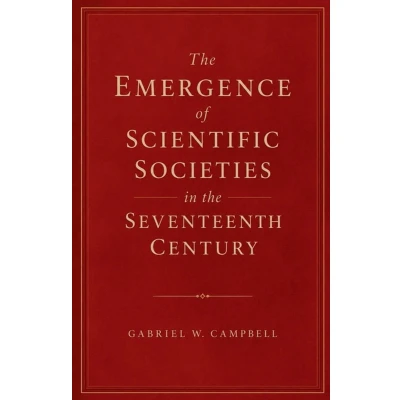
The emergence of scientific societies in the seventeenth century marked a profound transformation in the organization of knowledge, yet this development cannot be understood without first appreciating the intellectual world that preceded it. Before formal institutions such as the Royal Society or the Académie Royale des Sciences appeared, the pursuit of natural knowledge unfolded within a mosaic of traditions-humanist scholarship, artisanal expertise, courtly inquiry, and scholastic philosophy-each with its own norms, authorities, and social structures. These traditions were vibrant and often sophisticated, but they lacked the durable, collective, and self-conscious institutional forms that later became emblematic of scientific culture. To understand why scientific societies emerged when they did, one must begin with the problem of scientific community itself: how knowledge was produced, shared, validated, and preserved in a world without stable scientific institutions.
 Prijshistorie
 * Prijshistorie bevat geen data van Amazon, Amazon Marketplace.
Prijzen voor het laatst bijgewerkt op:
 Gerelateerde resultaten
 Productspecificaties


