


€ 181,08 € 179,00 Gratis verzending

Uitgelicht
|
|
181,08
179,00 |
Naar shop
|

|
222,60 |
Naar shop
|

|
222,60 |
Naar shop
|
| VERGELIJK ALLE AANBIEDERS (3) | ||
 Beschrijving
Vergelijk aanbieders (3)
€ 181,08 € 179,00 Gratis verzending
€ 222,60 Gratis verzending
€ 222,60 Gratis verzending
Winkels met andere maten
Beschrijving
(1)
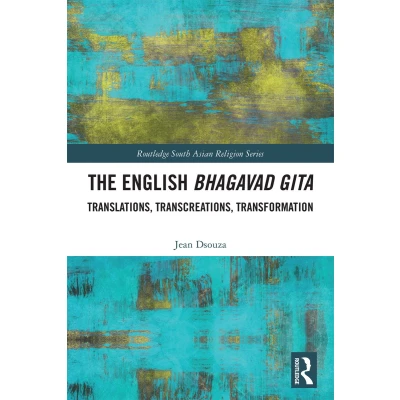
This book examines English translations and transcreations of the Bhagavad Gita, one of the most sacred and influential texts in Hinduism, exploring how textual transfers, affected by languages, cultures, and time, reconfigure the Gita’s content and meaning, thus transforming it. This book examines English translations and transcreations of The Bhagavad Gita, one of the most sacred and influential texts in Hinduism, exploring how textual transfers, affected by languages, cultures, and time, reconfigure the Gita’s content and meaning, thus transforming it. Thought to be the first academic volume to apply a comparative methodology to English renderings of The Bhagavad Gita, the book differentiates between widely accepted ‘equivalent’ translations, and creative re-imaginings of the text in the form of transcreations. Chapters explore conversations that occur in translation: both between the Gita and its interpreters, and among various translated versions of the text. By employing a novel analytical framework, termed the “dialectic of intimacy,” the book examines how translators negotiate their personal, cultural, and ideological proximity to, or distance from, the text. Moving beyond linguistic equivalence, it presents The Bhagavad Gita in English as a site of continuous transformation shaped by linguistic and contextual forces surrounding its production and reception, while also demonstrating the work’s enduring legacy. A novel contribution to scholarship focusing on The Bhagavad Gita’s reception through translation and transcreation, this book will benefit scholars, researchers, and post-graduate students in the fields of translation studies, religious studies, and postcolonial studies, as well as comparative literature. The book also invites readers interested in how sacred texts travel across languages and time, and how textual transformations emerge in that journey.
 Prijshistorie
 * Prijshistorie bevat geen data van Amazon, Amazon Marketplace.
Prijzen voor het laatst bijgewerkt op:
 Gerelateerde resultaten
 Productspecificaties


