
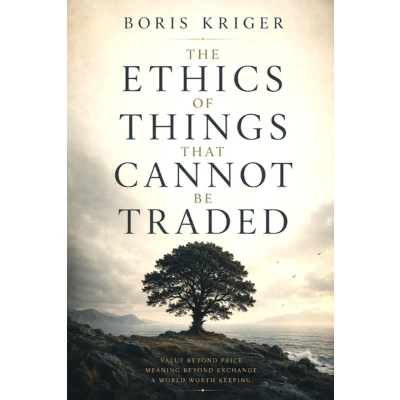
THE ETHICS OF THINGS THAT CANNOT BE TRADED
Uitgelicht

|
18,50 |
Naar shop
|

|
18,50 |
Naar shop
|

|
19,00 |
Naar shop
|
| VERGELIJK ALLE AANBIEDERS (3) | ||
 Beschrijving
Bol
There is a kind of mind that cannot leave the world alone. It looks at hunger, at injustice, at the long catalog of human suffering, and it refuses to accept that nothing can be done. Sergei Bulgakov had such a mind. He began the new century as a rising economist and a confident Marxist, certain that the laws of history would, in time, set things right. He ended it as a theologian of divine Wisdom, convinced that no law of history would ever save a single human soul. This book follows that astonishing journey - from the rent of farmland to the riddle of Sophia - as the story of one man circling, again and again, a single locked door. Behind it lies the question that every grand scheme of salvation eventually runs into: how do you help humanity without losing the actual, breathing, frightened human being in front of you? Bulgakov tried Marxism and found it counting bushels while people starved. He tried the religion of Progress and found it a faith with no face. In the end he came to suspect that the world is not transformed by manifestos at all, but by something far smaller and far harder - the quiet good of small deeds, done without theory, formula, or applause. Written for the curious general reader and entirely free of jargon, this is a portrait of a thinker who refused every easy answer, and of an idea that still unsettles us: that there are things in human life - a person's dignity, a moment of mercy, the worth of one unrepeatable soul - that cannot be calculated, cannot be postponed, and must never be traded away. Keywords: Bulgakov, Sophia, economics, ethics, Russian philosophy, Marxism, salvation


 Beschrijving
(1)
Beschrijving
(1)
There is a kind of mind that cannot leave the world alone. It looks at hunger, at injustice, at the long catalog of human suffering, and it refuses to accept that nothing can be done. Sergei Bulgakov had such a mind. He began the new century as a rising economist and a confident Marxist, certain that the laws of history would, in time, set things right. He ended it as a theologian of divine Wisdom, convinced that no law of history would ever save a single human soul. This book follows that astonishing journey - from the rent of farmland to the riddle of Sophia - as the story of one man circling, again and again, a single locked door. Behind it lies the question that every grand scheme of salvation eventually runs into: how do you help humanity without losing the actual, breathing, frightened human being in front of you? Bulgakov tried Marxism and found it counting bushels while people starved. He tried the religion of Progress and found it a faith with no face. In the end he came to suspect that the world is not transformed by manifestos at all, but by something far smaller and far harder - the quiet good of small deeds, done without theory, formula, or applause. Written for the curious general reader and entirely free of jargon, this is a portrait of a thinker who refused every easy answer, and of an idea that still unsettles us: that there are things in human life - a person's dignity, a moment of mercy, the worth of one unrepeatable soul - that cannot be calculated, cannot be postponed, and must never be traded away. Keywords: Bulgakov, Sophia, economics, ethics, Russian philosophy, Marxism, salvation
 Productspecificaties
 Prijshistorie
* Prijshistorie bevat geen data van Amazon, Amazon Marketplace.
Prijzen voor het laatst bijgewerkt op:
 Gerelateerde resultaten


