


€ 136,00 Gratis verzending

Uitgelicht
|
|
136,00 |
Naar shop
|
| VERGELIJK ALLE AANBIEDERS (1) | ||
 Beschrijving
Vergelijk aanbieders (1)
€ 136,00 Gratis verzending
Winkels met andere maten
Beschrijving
(1)
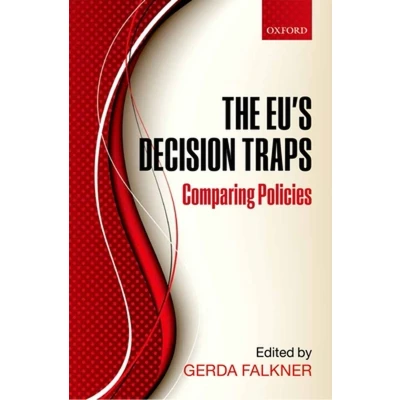
Is European integration predominantly characterised by stalemate? The EU's Decision Traps compares a number of crucial EU policy areas discussing if and how political blockage can be overcome in the process of European integration. Fritz W. Scharpf's renowned model of the 'joint-decision trap' suggestes that the requirements of (nearly) unanimous decisions in the EU's Council of Ministers, combined with conflicting preferences among member governments, will systematically limit the problem-solving effectiveness of European policies. However, certain conditions have significantly changed in the 25 years since the theory was first posited. In particular, the unanimity rule has been replaced by qualified-majority voting in most issue areas, and successive rounds of enlargement have augmented the diversity of member state interests and preferences. This volume examines the continued relevance of the model. It presents a comparative study on the differential politics in EU policies. Looking at the political dynamics in an array of EU activities, it analyses breakthroughs as well as stalemates and asks why leaps occur in some areas whilst blockages characterise others. The dynamics that allow the EU to escape various forms of decision trap are analysed in-depth, including those suggested by 'rationalist' theorists (supranational-hierarchical steering, treaty-base games, and arena shifting) and those suggested by 'constructivist' approaches (socialisation). The volume concludes that when the EU is confronted with a high degree of problem pressure in a given issue area, these mechanisms will often not be available because most remain outside politicians' immediate grasp.
 Productspecificaties
| EAN |
|
|---|---|
| Maat |
|
 Prijshistorie
 Prijzen voor het laatst bijgewerkt op:
 Gerelateerde resultaten


