

€ 18,82 Gratis verzending

Uitgelicht
|
|
18,82 |
Naar shop
|

|
18,82 |
Naar shop
|

|
19,00 |
Naar shop
|
| VERGELIJK ALLE AANBIEDERS (3) | ||
 Beschrijving
Vergelijk aanbieders (3)
€ 18,82 Gratis verzending
€ 18,82 Gratis verzending
€ 19,00 € 2,99 verzendkosten Totaal € 21,99
Winkels met andere maten
Beschrijving
(1)
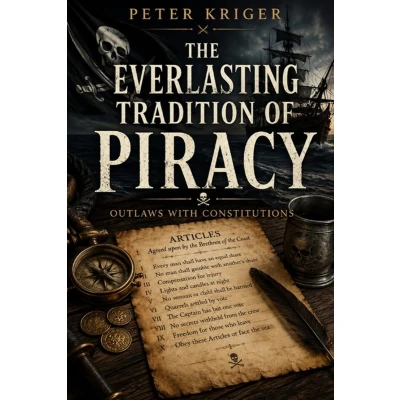
Piracy is the only crime that any nation on earth may punish, anywhere, no matter where it happened or whom it harmed. That extraordinary power rests on a single requirement written into the law of the sea: the act must have been committed for private ends. Not on what was done. On whose authority it was done under. Take a ship without a paper and you are the enemy of all mankind. Take the same ship with a paper and you are an instrument of state. This book follows that paper across four centuries, and finds that it explains almost everything the popular image gets backwards. The men we call pirates were not defined by robbery, since robbery at sea was a licensed profession until 1856. They were defined by having no sovereign above them, and what they did with that condition is the strangest fact in the whole history. They wrote constitutions. They elected their captains and voted them out. They separated the power to command from the power to divide the spoils. They paid a fixed sum from a common fund to any man crippled in service, in a century when no navy, no merchant house, and no government on earth offered anything of the kind. Outlaws produced more law, and better law, than the order that hanged them for it. Why they did this turns out to have nothing to do with ideals and everything to do with the shape of the danger they lived inside, and with the length of the future they expected to have. And why their arrangement never became a country, while a comparable one in another ocean grew into something close to a state and then negotiated its own retirement, is a question about boundaries rather than about beliefs. >Keywords: piracy, maritime law, governance, risk, sovereignty, chokepoints, institutions
 Prijshistorie
 * Prijshistorie bevat geen data van Amazon, Amazon Marketplace.
Prijzen voor het laatst bijgewerkt op:
 Gerelateerde resultaten
 Productspecificaties


