

€ 23,20 Gratis verzending

Uitgelicht
|
|
23,20 |
Naar shop
|

|
23,20 |
Naar shop
|

|
24,99 |
Naar shop
|
| VERGELIJK ALLE AANBIEDERS (3) | ||
 Beschrijving
Vergelijk aanbieders (3)
€ 23,20 Gratis verzending
€ 23,20 Gratis verzending
€ 24,99 € 2,99 verzendkosten Totaal € 27,98
Winkels met andere maten
Beschrijving
(1)
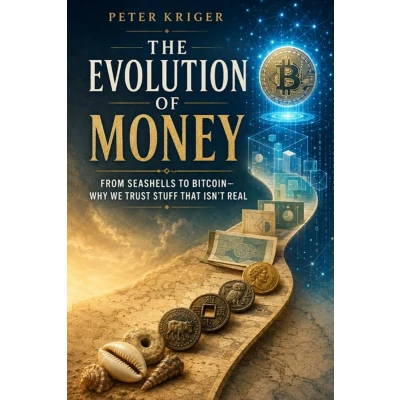
Hand a stranger a rectangle of printed cotton and he will hand you back a hot meal. Nothing about that rectangle is edible, useful, or scarce in any natural sense. It works because a large number of people you will never meet have agreed, tacitly and permanently, to behave as if it works. That agreement is the most powerful technology our species has ever built, and almost nobody can explain how it functions. The Evolution of Money follows the strangest invention in human history from clay tablets recording barley debts to the quiet hum of servers settling claims that exist only as entries in a shared file. Along the way it visits the shells that circulated across three continents, the stone discs that stayed exactly where they were while their ownership traveled, the notched sticks that ran a medieval treasury, the mountain of silver that accidentally globalized the planet, the printing presses that destroyed two revolutions, the meeting rooms where a gold standard was buried, and the anonymous message board post that proposed doing the whole thing without anyone in charge. Peter Kriger tells this story not as economic history but as the history of a shared belief that has repeatedly been engineered, exploited, over-extended, and rebuilt. Money turns out to be less a substance than a network property: it exists in the space between people rather than inside any object, which is why it can be created by decree and destroyed by rumor. Understanding that is the difference between reading a financial panic as a moral failure and reading it as a system doing exactly what its structure permits. Witty, skeptical, and full of the kind of detail that changes how you look at your own wallet, this is a book about trust - how it is manufactured, how it is measured, how quickly it evaporates, and what happens next. Keywords: money, economic history, trust, currency, inflation, banking, cryptocurrency
 Prijshistorie
 * Prijshistorie bevat geen data van Amazon, Amazon Marketplace.
Prijzen voor het laatst bijgewerkt op:
 Gerelateerde resultaten
 Productspecificaties


