
the Fall of Granada in 1492: End Muslim Rule on Iberian Peninsula and Military Enforcement Spanish Monarchy
Uitgelicht

|
15,00 |
Naar shop
|

|
17,98 |
Naar shop
|

|
17,98 |
Naar shop
|
| VERGELIJK ALLE AANBIEDERS (3) | ||
 Beschrijving
Bol
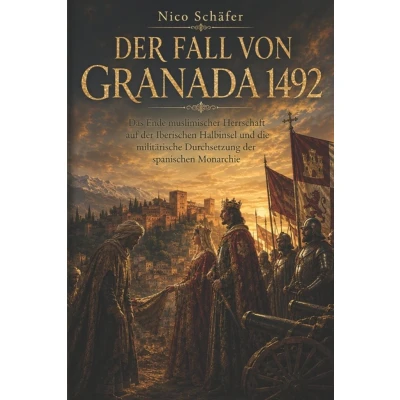
The Fall of Granada in 1492 tells the story of the last great chapter of Muslim rule on the Iberian Peninsula and explains how Ferdinand of Aragon and Isabella of Castile gradually put military, political and economic pressure on the Nasrid Empire. The war for Granada was much more than the dramatic surrender of the Alhambra on January 2, 1492. For years, sieges, artillery, supply problems, dynastic conflicts and diplomatic maneuvers decided the fate of the emirate. Cities such as Ronda, Loja, Málaga and Baza became decisive locations. At the same time, the power struggle between Boabdil, al Zagal and other members of the Nasrid dynasty weakened Granada's ability to take united action against the Catholic monarchs. This book understandably shows why the Nasrid Empire eventually succumbed despite its strong fortifications, economic importance and experienced defenders. It explains the role of artillery and siege warfare, the importance of money, the church and crusade ideology, and the political interests of Ferdinand and Isabella. It becomes clear that Granada did not fall in a single decisive battle, but through years of territorial losses, economic exhaustion and increasing political isolation. The book also deals with Boabdil's difficult role, the capitulation conditions of 1491 and the consequences of the Christian seizure of power. Although Muslim statehood on the Iberian Peninsula ended on January 2, 1492, the history of Granada's Muslim population did not. The later forced conversions, the emergence of the Moriscos, and the long-term social tensions show that the consequences of the conquest continued to have an effect for generations to come. The Fall of Granada 1492 is aimed at history buffs who want to get a well-founded and at the same time easily understandable overview of this important event. The book is deliberately not a special scientific study for historians, but a factually narrated introduction that takes into account military developments as well as politics, diplomacy, religion and the lives of the affected population. >Parts of the text have been revised with the support of artificial intelligence. It was used as a tool in structuring, research and linguistic elaboration. The contents have been carefully edited, historically classified and checked for factual consistency. In this way, the book combines modern working methods with the claim to offer a serious, understandable and high-quality presentation.


 Beschrijving
(1)
Beschrijving
(1)
The Fall of Granada in 1492 tells the story of the last great chapter of Muslim rule on the Iberian Peninsula and explains how Ferdinand of Aragon and Isabella of Castile gradually put military, political and economic pressure on the Nasrid Empire. The war for Granada was much more than the dramatic surrender of the Alhambra on January 2, 1492. For years, sieges, artillery, supply problems, dynastic conflicts and diplomatic maneuvers decided the fate of the emirate. Cities such as Ronda, Loja, Málaga and Baza became decisive locations. At the same time, the power struggle between Boabdil, al Zagal and other members of the Nasrid dynasty weakened Granada's ability to take united action against the Catholic monarchs. This book understandably shows why the Nasrid Empire eventually succumbed despite its strong fortifications, economic importance and experienced defenders. It explains the role of artillery and siege warfare, the importance of money, the church and crusade ideology, and the political interests of Ferdinand and Isabella. It becomes clear that Granada did not fall in a single decisive battle, but through years of territorial losses, economic exhaustion and increasing political isolation. The book also deals with Boabdil's difficult role, the capitulation conditions of 1491 and the consequences of the Christian seizure of power. Although Muslim statehood on the Iberian Peninsula ended on January 2, 1492, the history of Granada's Muslim population did not. The later forced conversions, the emergence of the Moriscos, and the long-term social tensions show that the consequences of the conquest continued to have an effect for generations to come. The Fall of Granada 1492 is aimed at history buffs who want to get a well-founded and at the same time easily understandable overview of this important event. The book is deliberately not a special scientific study for historians, but a factually narrated introduction that takes into account military developments as well as politics, diplomacy, religion and the lives of the affected population. >Parts of the text have been revised with the support of artificial intelligence. It was used as a tool in structuring, research and linguistic elaboration. The contents have been carefully edited, historically classified and checked for factual consistency. In this way, the book combines modern working methods with the claim to offer a serious, understandable and high-quality presentation.
 Productspecificaties
 Prijshistorie
* Prijshistorie bevat geen data van Amazon, Amazon Marketplace.
Prijzen voor het laatst bijgewerkt op:
 Gerelateerde resultaten


