

€ 13,85 Gratis verzending

Gesponsorde links
|
|
13,85 |
Naar shop
|

|
13,85 |
Naar shop
|

|
15,00 |
Naar shop
|
| VERGELIJK ALLE AANBIEDERS (3) | ||
 Beschrijving
Vergelijk aanbieders (3)
Gesponsorde links · Sommige shops betalen ons een vergoeding
€ 13,85 Gratis verzending
€ 13,85 Gratis verzending
€ 15,00 € 2,99 verzendkosten Totaal € 17,99
Winkels met andere maten
Beschrijving
(1)
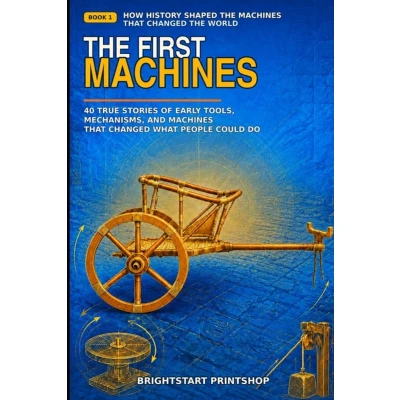
How did history shape the first machines-and how did those machines change human history? Long before engines and factories, people were already learning to guide force, store energy, turn motion, move heavy loads, harness wind and animals, and measure the world. Their machines did not appear from nowhere. They grew from available materials, local environments, skilled hands, shared knowledge, and the needs of families, farms, workshops, and communities. The First Machines follows 40 evidence-based true stories from about 12,000 BCE to 1,000 BCE. Young readers will discover how early tools and mechanisms-including bows, axes, sickles, grindstones, looms, plows, wagons, sails, pulleys, balances, and water clocks-worked, why people needed them, and what changed after they spread. - Clear explanations of force, motion, leverage, rotation, tension, and balance- Historical scenes grounded in archaeology and surviving evidence- 120 grayscale illustrations, mechanism diagrams, and evidence panels- Three Think About It questions after every story Written for ages 9-12, this illustrated narrative nonfiction book connects prehistory and ancient history with engineering, STEM, archaeology, inventions, and how things work. It supports independent reading, family learning, classroom discussion, and homeschool study. This is not a parade of famous inventors or a story of automatic progress. It is the deeper story of how real historical problems shaped tools and machines-and how those machines expanded what people could do.
 Prijshistorie
* Prijshistorie bevat geen data van Amazon, Amazon Marketplace.
Prijzen voor het laatst bijgewerkt op:
 Gerelateerde resultaten
 Productspecificaties


