


€ 18,00 € 2,99 verzendkosten Totaal € 20,99

Gesponsorde links
|
|
18,00 |
Naar shop
|

|
18,43 |
Naar shop
|

|
18,43 |
Naar shop
|
| VERGELIJK ALLE AANBIEDERS (3) | ||
 Beschrijving
Vergelijk aanbieders (3)
Gesponsorde links · Sommige shops betalen ons een vergoeding
€ 18,00 € 2,99 verzendkosten Totaal € 20,99
€ 18,43 Gratis verzending
€ 18,43 Gratis verzending
Winkels met andere maten
Beschrijving
(1)
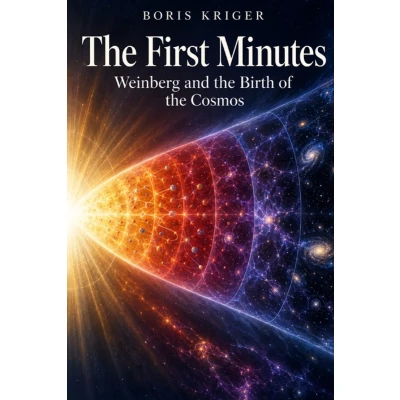
A boy in the Bronx opens a library book and finds an equation that says the order of operations matters: that measuring a particle's position and then its speed leaves the world in a different condition from doing it the other way round, and that the difference is a fixed number with nature's fingerprints on it. He is about ten. He knows that three fours and four threes come to the same thing. He concludes, reasonably, that somebody is going to have to explain this, and that it may have to be him. Steven Weinberg spent the next seventy-eight years on it. He wrote three pages in 1967 that welded two of nature's four forces into one and became the most cited paper in the history of high-energy physics - after sitting unread for four years while the profession looked the other way. He won a Nobel Prize. He told several million general readers, in a book that became famous, exactly what the universe was doing between one hundredth of a second and three minutes old, and he did it without lying to them once. He also, in a paper almost nobody outside the field has read, quietly knocked the legs out from under his own life's ambition. He dreamed publicly of a final theory. Then he proved that every theory we have is a local dialect, fluent up to a certain energy and mute above it, and that this is not a defect but the actual shape of physical knowledge. The same man held both positions, argued each with total conviction, and does not appear to have lost sleep. This is his life told through the physics, and the physics told through his life: the neutral currents that could have killed his theory and confirmed it instead; the anthropic argument he made when nothing else was working, and the answer that has since been derived from measured quantities with nothing fitted; the textbook running to fifteen hundred pages that opens with a history lesson; the enormous hole in the Texas ground where a machine was supposed to go. And running underneath it, a question Weinberg posed better than anyone and did not settle: what a final theory would have to be, given that we have never once had one. Also here, because the reader is entitled to know when the author has skin in the game, is the case this author has been making in a decade of papers, cited so that anyone with an afternoon and a grudge can check the arithmetic. >Keywords: Steven Weinberg, particle physics, cosmology, Standard Model, quantum field theory, history of science, popular science
 Prijshistorie
* Prijshistorie bevat geen data van Amazon, Amazon Marketplace.
Prijzen voor het laatst bijgewerkt op:
 Gerelateerde resultaten
 Productspecificaties


