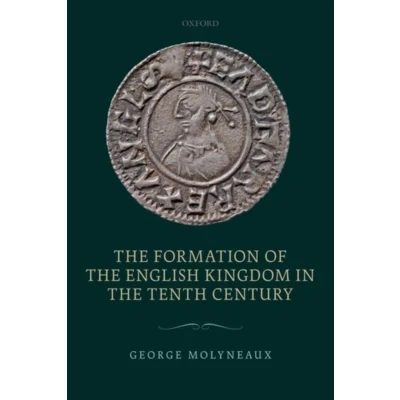

the Formation of English Kingdom in Tenth Century

Prijzen vanaf
37,99

Uitgelicht

VERGELIJK ALLE AANBIEDERS (2)

Beschrijving

Bol Partner The only modern study devoted to the question of how the English kingdom was formed, arguing that the eleventh-century English kingdom was defined, not by any earlier vision of English unity, but by a series of administrative reforms that appear to have been implemented in the mid- to late tenth century. The central argument of The Formation of the English Kingdom in the Tenth Century is that the English kingdom which existed at the time of the Norman Conquest was defined by the geographical parameters of a set of administrative reforms implemented in the mid- to late tenth century, and not by a vision of English unity going back to Alfred the Great (871-899). In the first half of the tenth century, successive members of the Cerdicing dynasty established a loose domination over the other great potentates in Britain. They were celebrated as kings of the whole island, but even in their Wessex heartlands they probably had few means to regulate routinely the conduct of the general populace. Detailed analysis of coins, shires, hundreds, and wapentakes suggests that it was only around the time of Edgar (957/9-975) that the Cerdicing kings developed the relatively standardised administrative apparatus of the so-called 'Anglo-Saxon state'. This substantially increased their ability to impinge upon the lives of ordinary people living between the Channel and the Tees, and served to mark that area off from the rest of the island. The resultant cleft undermined the idea of a pan-British realm, and demarcated the early English kingdom as a distinct and coherent political unit. In this volume, George Molyneaux places the formation of the English kingdom in a European perspective, and challenges the notion that its development was exceptional: the Cerdicings were only one of several ruling dynasties around the fringes of the former Carolingian Empire for which the late ninth, tenth, and eleventh centuries were a time of territorial expansion and consolidation.

Vergelijk aanbieders (2)

Shop
Prijs
Verzendkosten
Totale prijs
37,99
Gratis
37,99
Naar shop
Gratis Shipping Costs
113,44
gebruikt
Gratis
113,44
Naar shop
Gratis Shipping Costs
Beschrijving (2)
Bol Partner

The only modern study devoted to the question of how the English kingdom was formed, arguing that the eleventh-century English kingdom was defined, not by any earlier vision of English unity, but by a series of administrative reforms that appear to have been implemented in the mid- to late tenth century. The central argument of The Formation of the English Kingdom in the Tenth Century is that the English kingdom which existed at the time of the Norman Conquest was defined by the geographical parameters of a set of administrative reforms implemented in the mid- to late tenth century, and not by a vision of English unity going back to Alfred the Great (871-899). In the first half of the tenth century, successive members of the Cerdicing dynasty established a loose domination over the other great potentates in Britain. They were celebrated as kings of the whole island, but even in their Wessex heartlands they probably had few means to regulate routinely the conduct of the general populace. Detailed analysis of coins, shires, hundreds, and wapentakes suggests that it was only around the time of Edgar (957/9-975) that the Cerdicing kings developed the relatively standardised administrative apparatus of the so-called 'Anglo-Saxon state'. This substantially increased their ability to impinge upon the lives of ordinary people living between the Channel and the Tees, and served to mark that area off from the rest of the island. The resultant cleft undermined the idea of a pan-British realm, and demarcated the early English kingdom as a distinct and coherent political unit. In this volume, George Molyneaux places the formation of the English kingdom in a European perspective, and challenges the notion that its development was exceptional: the Cerdicings were only one of several ruling dynasties around the fringes of the former Carolingian Empire for which the late ninth, tenth, and eleventh centuries were a time of territorial expansion and consolidation.

Bol

The central argument of The Formation of the English Kingdom in the Tenth Century is that the English kingdom which existed at the time of the Norman Conquest was defined by the geographical parameters of a set of administrative reforms implemented in the mid- to late tenth century, and not by a vision of English unity going back to Alfred the Great (871-899). In the first half of the tenth century, successive members of the Cerdicing dynasty established a loose domination over the other great potentates in Britain. They were celebrated as kings of the whole island, but even in their Wessex heartlands they probably had few means to regulate routinely the conduct of the general populace. Detailed analysis of coins, shires, hundreds, and wapentakes suggests that it was only around the time of Edgar (957/9-975) that the Cerdicing kings developed the relatively standardised administrative apparatus of the so-called 'Anglo-Saxon state'. This substantially increased their ability to impinge upon the lives of ordinary people living between the Channel and the Tees, and served to mark that area off from the rest of the island. The resultant cleft undermined the idea of a pan-British realm, and demarcated the early English kingdom as a distinct and coherent political unit. In this volume, George Molyneaux places the formation of the English kingdom in a European perspective, and challenges the notion that its development was exceptional: the Cerdicings were only one of several ruling dynasties around the fringes of the former Carolingian Empire for which the late ninth, tenth, and eleventh centuries were a time of territorial expansion and consolidation.


Productspecificaties

EAN
  • 9780192542939
  • 9780198813460
  • 9780198717911
Maat


Prijshistorie

Prijzen voor het laatst bijgewerkt op:

Uitgelichte Keuze
37,99
Naar shop
