


€ 20,47 € 2,99 verzendkosten Totaal € 23,46

Gesponsorde links
|
|
20,47 |
Naar shop
|

|
21,20 |
Naar shop
|

|
21,20 |
Naar shop
|
| VERGELIJK ALLE AANBIEDERS (3) | ||
 Beschrijving
Vergelijk aanbieders (3)
Gesponsorde links · Sommige shops betalen ons een vergoeding
€ 20,47 € 2,99 verzendkosten Totaal € 23,46
€ 21,20 Gratis verzending
€ 21,20 Gratis verzending
Winkels met andere maten
Beschrijving
(1)
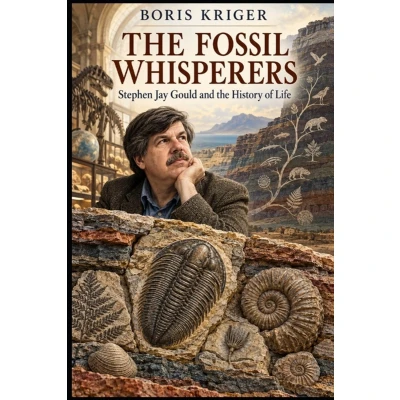
In 1946 a five-year-old from Queens stood under a tyrannosaur and decided, on the spot, what he would do with his life. He kept the promise for fifty-six years. What nobody could have predicted is that he would spend most of them arguing with people, cheerfully and at enormous length, in a prose style that made several million readers care deeply about land snails. Stephen Jay Gould was the most widely read scientist of his generation and the most thoroughly disliked by a certain wing of his own profession. He wrote three hundred consecutive monthly essays without missing one. He sang baritone, followed the Yankees with the devotion of a man who had never considered an alternative, appeared as a cartoon on television, and objected to exactly one line in the script: the one calling him the world's most brilliant paleontologist. He also told his entire field that the fossil record was not a smooth ramp, that natural selection was not the answer to every question you could ask about an organism, and that a single number could not measure a mind. Some of this was right. Some of it was overstated. One episode, involving a drawer of nineteenth-century skulls, ended with Gould measured by his own instrument and found wanting. This book follows one operation performed over and over across a career. Somebody hands Gould a single number, a single direction, a single cause, and he hands back a spread. He did it to the ladder of progress. He did it to the intelligence quotient. He did it to the vanished four-hundred hitter in baseball. And in 1982, when an oncologist's literature handed him a median survival of eight months, he did it to his own death sentence and bought himself twenty more years. Along the way: what stasis in the fossil record actually is and why it is stranger than change; what a spandrel becomes once you take the architecture seriously; why the fossil record is a sample so thin that reasoning from it requires a theory of what is missing; and why every system that lasts starts to look as though it was designed for the job, a claim Gould argued brilliantly and could not prove, and which can now be proved. >Keywords: Stephen Jay Gould; evolution; paleontology; punctuated equilibrium; contingency; scientific controversy; history of science
 Prijshistorie
* Prijshistorie bevat geen data van Amazon, Amazon Marketplace.
Prijzen voor het laatst bijgewerkt op:
 Gerelateerde resultaten
 Productspecificaties


