


€ 29,99 Gratis verzending

Uitgelicht
|
|
29,99 |
Naar shop
|

|
58,86 |
Naar shop
|

|
58,86 |
Naar shop
|
| VERGELIJK ALLE AANBIEDERS (3) | ||
 Beschrijving
Vergelijk aanbieders (3)
€ 29,99 Gratis verzending
€ 58,86 € 9,99 verzendkosten Totaal € 68,85
€ 58,86 € 9,99 verzendkosten Totaal € 68,85
Winkels met andere maten
Beschrijving
(1)
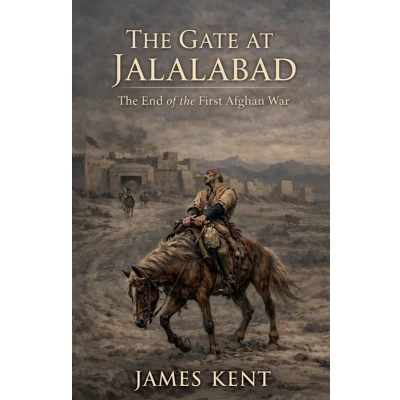
THE GATE AT JALALABAD The End of the First Afghan War On 6 January 1842, a column of 16,500 people, 4,500 soldiers and 12,000 civilians, departed the British garrison at Kabul under a negotiated withdrawal agreement. Seven days later, a single figure appeared on the plain before the walls of Jalalabad: Dr. William Brydon, army surgeon, riding a dying pony, a sword wound in his skull. He was the only one. In The Gate at Jalalabad, the full story of one of the nineteenth century's most catastrophic military disasters is told for the first time through the eyes of the man who survived it. Drawing on Brydon's own memoir, the journals of Lady Florentia Sale, and the deep Afghan sources that earlier accounts have overlooked, this is a narrative history of hubris and endurance, of an empire that convinced itself it could govern a country that had never agreed to be governed, and of the extraordinary human cost when that conviction finally met the passes of the Hindu Kush in January. Part immersive military history, part biography, part meditation on empire and its long shadow, The Gate at Jalalabad takes us from the drawing rooms of colonial Calcutta to the frozen floor of the Khord Kabul Pass, from Akbar Khan's strategic brilliance to the systematic failures of the British command, and from the burning bazaar of the Army of Retribution to the quiet grave of a Scottish surgeon in Perthshire who carried the story of 16,499 deaths in his healed skull for the rest of a long and reticent life. The gate through which he passed has never closed. The lesson it offers has never been more urgent.
 Prijshistorie
 * Prijshistorie bevat geen data van Amazon, Amazon Marketplace.
Prijzen voor het laatst bijgewerkt op:
 Gerelateerde resultaten
 Productspecificaties


