


€ 22,57 € 2,99 verzendkosten Totaal € 25,56

Gesponsorde links
|
|
22,57 |
Naar shop
|

|
23,63 |
Naar shop
|
| VERGELIJK ALLE AANBIEDERS (2) | ||
 Beschrijving
Vergelijk aanbieders (2)
Gesponsorde links · Sommige shops betalen ons een vergoeding
€ 22,57 € 2,99 verzendkosten Totaal € 25,56
€ 23,63 Gratis verzending
Winkels met andere maten
Beschrijving
(1)
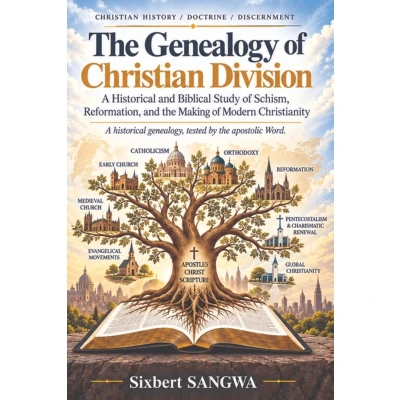
How did the churches of the apostolic age become the diverse communions, denominations, movements, networks, and Christian-derived religions of the contemporary world? This book addresses that question through a chronological historical genealogy joined to an explicitly Sola Scriptura theological assessment. Rather than arranging traditions as isolated entries, it reconstructs the conditions preceding major changes, identifies the actors and disputes involved, and follows the institutions and teachings that emerged. Its governing distinction is between demonstrable historical relationship and the theological claim to remain faithful to the apostles.The narrative begins with the New Testament churches and the post-apostolic development of episcopal leadership, succession arguments, rules of faith, and canonical recognition. It then examines imperial patronage, the Trinitarian and Christological councils, the East Syriac and Oriental Orthodox trajectories, and the gradual estrangement of Rome and Constantinople. Medieval Latin consolidation and internal reform prepare the sixteenth-century Reformation, which generated several Protestant families rather than one homogeneous alternative to Rome. Subsequent chapters trace dissent, Pietism, Methodism, revival, restorationism, Adventism, additional-scripture movements, Pentecostalism, fundamentalism, healing ministries, charismatic renewal, and independent networks.African Christianity is treated as ancient, internally diverse, and historically creative, not merely as a recipient of modern mission. Rwanda supplies a national case study in which mission genealogies, revival, division, genocide, reconstruction, and contemporary religious change intersect. The concluding synthesis reconstructs the modern Christian family tree and evaluates its central doctrinal fault lines concerning authority, God, Christ, salvation, ministry, sacraments, revelation, and eschatology.Throughout, primary and official sources are distinguished from scholarly interpretation, denominational memory, founder teaching, later doctrine, and contemporary practice. Direct descent is separated from schism, reform, revival, restoration, merger, influence, and new religious formation. The central argument is that neither antiquity nor novelty establishes apostolic fidelity. Historical genealogy clarifies the relationships; the prophetic-apostolic Scriptures provide the final theological criterion. The volume offers readers an integrated narrative and reference apparatus for understanding both the making of Christian plurality and the enduring responsibility to test Christian truth claims.
 Prijshistorie
* Prijshistorie bevat geen data van Amazon.
Prijzen voor het laatst bijgewerkt op:
 Gerelateerde resultaten
 Productspecificaties


