

€ 41,94 Gratis verzending

Uitgelicht
|
|
41,94 |
Naar shop
|

|
41,94 |
Naar shop
|

|
42,99 |
Naar shop
|
| VERGELIJK ALLE AANBIEDERS (3) | ||
 Beschrijving
Vergelijk aanbieders (3)
€ 41,94 Gratis verzending
€ 41,94 Gratis verzending
€ 42,99 Gratis verzending
Winkels met andere maten
Beschrijving
(1)
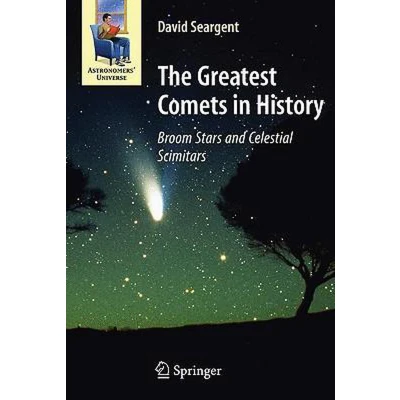
Naked-eye comets are far from uncommon. The ‘classical’ comet – a bright star-like object with a long flowing tail – is a sight that graces our skies about once per decade, on average. Some comets can sport prodigiously long tails and yet not be regarded as great. Comets have fascinated and awed humankind since ancient times. Of the thousands of comets recorded throughout history, those deemed to have been the most spectacular have been described in the accounts of eyewitnesses and often recorded in official documents. This book introduces you to the greatest of the greats, starting with the comet in 372 B. C. called "Aristotle’s Comet" and ending with the spectacular appearance of McNaught’s Comet in 2007. There is an introductory chapter explaining what comets are and how they are classified, and correcting a few popular misconceptions. Later in the book you will read about the different returns of Halley’s Comet and the Kreutz sungrazing group, often called the kamikaze comets. There is even a chapter on comets that were visible in broad daylight. This book is unique. There are a few books on comets that make passing reference to some of the more famous or spectacular objects of the past, and a few catalogs with long lists of comets. But little detailed and descriptive information is contained in either of these sources. This is a fascinating account, not only for astronomers at every level but also for readers of popular science. In an engaging way it pulls together a vast amount of information and offers rich anecdotal material that will entertain as well as inform you. Naked-eye comets are far from uncommon. As a rough average, one appears every 18 months or thereabouts, and it is not very unusual to see more than two in a single year. The record so far seems to have been 2004, with a total of five comets visible without optical aid. But 2006, 1970, and 1911 were not far behind with a total of four apiece. Yet, the majority of these pass unnoticed by the general public. Most simply look like fuzzy stars with tails that are either faint or below the naked-eye threshold. The ‘classical’ comet – a bright star-like object with a long flowing tail – is a sight that graces our skies about once per decade, on average. These ‘great comets’ are surely among the most beautiful objects that we can see in the heavens, and it is no wonder that they created such fear in earlier times. Just what makes a comet ‘‘great’’ is not easy to define. It is neither just about brightness nor only a matter of size. Some comets can sport prodigiously long tails and yet not be regarded as great. Others can become very bright, but hardly anyone other than a handful of enthusiastic astronomers will ever see them. Much depends on their separation from the Sun, the intensity of the tail, and so forth.
 Prijshistorie
 * Prijshistorie bevat geen data van Amazon, Amazon Marketplace.
Prijzen voor het laatst bijgewerkt op:
 Gerelateerde resultaten
 Productspecificaties


