

€ 9,23 Gratis verzending

Gesponsorde links
|
|
9,23 |
Naar shop
|

|
9,23 |
Naar shop
|

|
10,50 |
Naar shop
|
| VERGELIJK ALLE AANBIEDERS (3) | ||
 Beschrijving
Vergelijk aanbieders (3)
Gesponsorde links · Sommige shops betalen ons een vergoeding
€ 9,23 Gratis verzending
€ 9,23 Gratis verzending
€ 10,50 € 2,99 verzendkosten Totaal € 13,49
Winkels met andere maten
Beschrijving
(1)
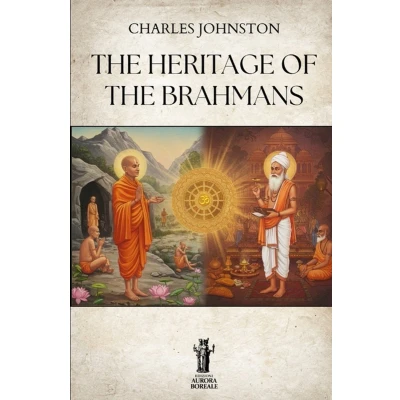
Charles Johnston (1867-1931) was an Irish writer, journalist, theosophist, linguist, naturalist, and Sanskrit scholar. He wrote numerous books on Indian philosophy, translating works from Sanskrit as well as on Theosophy. He was married to the niece of Madame Blavatsky and was involved in the development of the Theosophical Society in the United States. The Johnston's short essay The Heritage of the Brahmans, which we propose to our readers today, was published in January 1894 in the Oriental Department Papers. When Charles Johnston published The Heritage of the Brahmans, the late Victorian world was undergoing a profound intellectual and spiritual realignment. An Irish-born linguist, civil servant, and prominent member of the Theosophical movement, Johnston stood at the crossroads of European Orientalism and Eastern esoteric philosophy. This concise yet sweeping essay serves not merely as a historical survey of India's priestly caste, but as an impassioned manifesto heralding what he termed an "Indian Renaissance" in Western thought. Central to Johnston's argument is an audacious subversion of orthodox assumptions regarding spiritual lineage. While honoring the Brahmans as meticulous stewards of sacred knowledge, Johnston emphasizes the Vedic and Upanishadic traditions that trace esoteric wisdom back to the Royal Sages (Râjanyas or Kshatriyas). In his narrative, the Brahmans emerge as the faithful custodians-the protective "casket" forged through stringent discipline, ritual purity, and unmatched fidelity to preserve truths that originated among the warrior-philosophers of India's Golden Age. Johnston weaves a rich historical tapestry, illustrating the resilience of this heritage through cycles of institutional degeneration, internal reform, and foreign subjugation. He highlights Shankaracharya as the consummate reformer who cleansed the core of the tradition from hollow ceremonialism. He further traces the miraculous survival of the Upanishads through the syncretic court of Akbar, Prince Dara Shikoh's Persian rendering, Anquetil-Duperron's Latin translation, and Arthur Schopenhauer's philosophy, down to the pioneering research of Sir William Jones and Henry Thomas Colebrooke. Written with Johnston's characteristic eloquence, The Heritage of the Brahmans reflects the racial and historical paradigms of the late nineteenth century while offering an enduring tribute to the universality of spiritual knowledge. It remains a compelling historical document that captures the nineteenth-century dawn of global intercultural philosophy and the West's rediscovery of the inner light of the soul.
 Prijshistorie
* Prijshistorie bevat geen data van Amazon, Amazon Marketplace.
Prijzen voor het laatst bijgewerkt op:
 Gerelateerde resultaten
 Productspecificaties


