


€ 17,00 € 2,99 verzendkosten Totaal € 19,99

Uitgelicht
|
|
17,00 |
Naar shop
|

|
17,40 |
Naar shop
|
| VERGELIJK ALLE AANBIEDERS (2) | ||
 Beschrijving
Vergelijk aanbieders (2)
€ 17,00 € 2,99 verzendkosten Totaal € 19,99
€ 17,40 Gratis verzending
Winkels met andere maten
Beschrijving
(1)
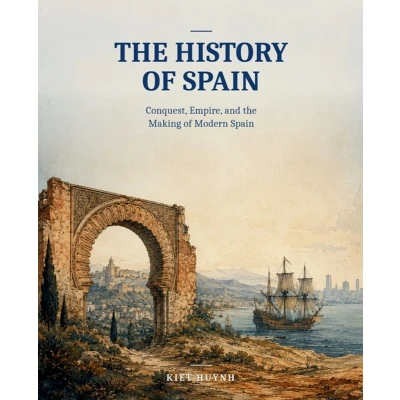
How does a country receive the largest windfall in history and end up poorer than the neighbours who received none of it?Between 1500 and 1650, roughly 16,000 tonnes of registered silver crossed the Atlantic into Seville. In the same years the Spanish crown declared bankruptcy in 1557, 1575, 1596, and again in 1607 and 1627. That paradox sits at the centre of this book - a complete history of Spain, from the painted caves of Altamira to the elections and exhumations of the twenty-first century, told with the figures left in.Inside, you'll find: - The eight centuries most books skip. How a raiding force of perhaps 7,000 to 12,000 men ended a kingdom in 711, and how tenth-century Córdoba became one of Europe's largest cities.- The arithmetic of conquest. Roughly 500 Spaniards and 16 horses did not topple an empire of millions. Tens of thousands of indigenous allies and a smallpox epidemic did.- An empire that could not pay for itself. Silver fleets, Genoese bankers, the forty-five mutinies of the Army of Flanders, and the 130 ships that sailed for England in 1588.- The long reckoning. Trafalgar, the lost Americas, the ten-week war of 1898, a civil war near half a million dead - and, one lifetime later, a constitution approved by nearly nine voters in ten.No background in Spanish or European history is needed. Every term is explained where it appears, every estimate is labelled as one, and where historians disagree, the book says so.Spain has been the most powerful state on earth and one of the poorest countries in Western Europe. This is how the same country did both.
 Prijshistorie
 * Prijshistorie bevat geen data van Amazon.
Prijzen voor het laatst bijgewerkt op:
 Gerelateerde resultaten
 Productspecificaties


