
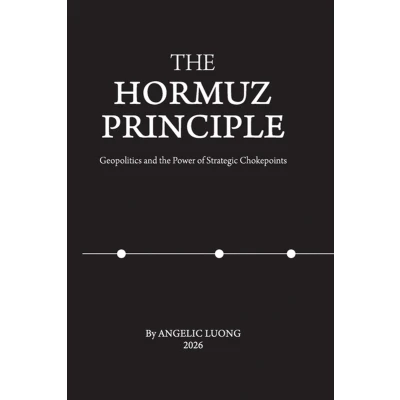
The Hormuz Principle
Uitgelicht

|
35,99 |
Naar shop
|

|
39,70 |
Naar shop
|

|
39,70 |
Naar shop
|
| VERGELIJK ALLE AANBIEDERS (3) | ||
 Beschrijving
Bol
Power in the modern world is often measured through military strength, economic size, or technological capacity. Yet beneath these visible indicators lies a quieter and often underestimated force: geography. The Hormuz Principle examines how narrow strategic passages-known as chokepoints-shape the architecture of global power far beyond their physical size.At the center of this analysis is the Strait of Hormuz, one of the most critical maritime corridors in the world, through which a significant share of global energy supply must pass. Its strategic importance reveals a broader structural pattern: when essential flows of trade, energy, and resources are compressed into narrow geographic corridors, the actors positioned around those corridors acquire leverage disproportionate to their conventional power.From this foundation, the book develops the "Hormuz Principle" as a geopolitical framework for understanding chokepoints as structural nodes of influence in the international system. Through detailed analysis of the Strait of Hormuz, the Suez Canal, the Panama Canal, the Strait of Malacca, the Bab el-Mandeb Strait, and the South China Sea, the book demonstrates how global circulation repeatedly converges into narrow passages where geography becomes power.Moving beyond traditional geopolitical analysis focused on territory, military capability, or economic scale, The Hormuz Principle shifts attention toward the architecture of global flows: the routes through which energy, commerce, and strategic movement travel. It reveals how these chokepoints function as the hidden joints of globalization, where disruption can trigger cascading consequences across markets, supply chains, and state strategies.Combining historical analysis, strategic theory, and contemporary geopolitical case studies, this book offers a new framework for understanding how geography continues to shape power in the twenty-first century.The Hormuz Principle is essential reading for scholars of geopolitics, international relations, global trade, energy security, and for anyone seeking to understand the structural geography of the modern international system.


 Beschrijving
(1)
Beschrijving
(1)
Power in the modern world is often measured through military strength, economic size, or technological capacity. Yet beneath these visible indicators lies a quieter and often underestimated force: geography. The Hormuz Principle examines how narrow strategic passages-known as chokepoints-shape the architecture of global power far beyond their physical size.At the center of this analysis is the Strait of Hormuz, one of the most critical maritime corridors in the world, through which a significant share of global energy supply must pass. Its strategic importance reveals a broader structural pattern: when essential flows of trade, energy, and resources are compressed into narrow geographic corridors, the actors positioned around those corridors acquire leverage disproportionate to their conventional power.From this foundation, the book develops the "Hormuz Principle" as a geopolitical framework for understanding chokepoints as structural nodes of influence in the international system. Through detailed analysis of the Strait of Hormuz, the Suez Canal, the Panama Canal, the Strait of Malacca, the Bab el-Mandeb Strait, and the South China Sea, the book demonstrates how global circulation repeatedly converges into narrow passages where geography becomes power.Moving beyond traditional geopolitical analysis focused on territory, military capability, or economic scale, The Hormuz Principle shifts attention toward the architecture of global flows: the routes through which energy, commerce, and strategic movement travel. It reveals how these chokepoints function as the hidden joints of globalization, where disruption can trigger cascading consequences across markets, supply chains, and state strategies.Combining historical analysis, strategic theory, and contemporary geopolitical case studies, this book offers a new framework for understanding how geography continues to shape power in the twenty-first century.The Hormuz Principle is essential reading for scholars of geopolitics, international relations, global trade, energy security, and for anyone seeking to understand the structural geography of the modern international system.
 Productspecificaties
 Prijshistorie
* Prijshistorie bevat geen data van Amazon, Amazon Marketplace.
Prijzen voor het laatst bijgewerkt op:
 Gerelateerde resultaten


