


€ 25,99 Gratis verzending

Uitgelicht
|
|
25,99 |
Naar shop
|

|
78,00 |
Naar shop
|
| VERGELIJK ALLE AANBIEDERS (2) | ||
 Beschrijving
Vergelijk aanbieders (2)
€ 25,99 Gratis verzending
gebruikt € 78,00 Gratis verzending
Winkels met andere maten
Beschrijving
(1)
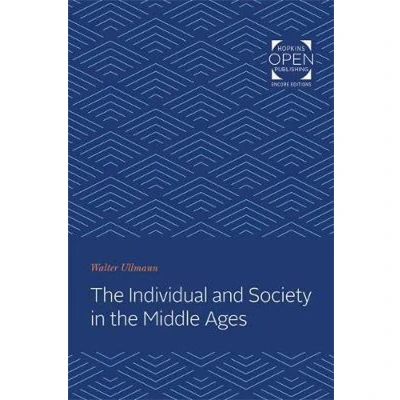
Originally published in 1966. The Individual and Society in the Middle Ages, based on three guest lectures given at Johns Hopkins University in 1965, explores the place of the individual in medieval European society. Looking at legal sources and political ideology of the era, Ullmann concludes that, for most of the Middle Ages, the individual was defined as a subject rather than a citizen, but the modern concept of citizenship gradually supplanted the subject model from the late Middle Ages onward. Ullmann lays out the theological basis of the political theory that cast the medieval individual as an inferior, abstract subject. The individual citizen who emerged during the late Middle Ages and the Renaissance, by contrast, was an autonomous participant in affairs of state. Several intellectual trends made this humanistic conception of the individual possible, among them the rehabilitation of vernacular writing during the thirteenth century and the growing interest in nature, natural philosophy, and natural law. However, Ullmann points to feudalism as the single most important medieval institution that laid the groundwork for the emergence of the modern citizen.
 Productspecificaties
| EAN |
|
|---|---|
| Maat |
|
 Prijshistorie
 Prijzen voor het laatst bijgewerkt op:
 Gerelateerde resultaten


