


€ 12,85 Gratis verzending

Uitgelicht
|
|
12,85 |
Naar shop
|

|
19,33 |
Naar shop
|

|
19,33 |
Naar shop
|
| VERGELIJK ALLE AANBIEDERS (4) | ||
 Beschrijving
Vergelijk aanbieders (4)
€ 12,85 Gratis verzending
€ 19,33 Gratis verzending
€ 19,33 Gratis verzending

€ 24,99 Gratis verzending
Winkels met andere maten
Beschrijving
(2)
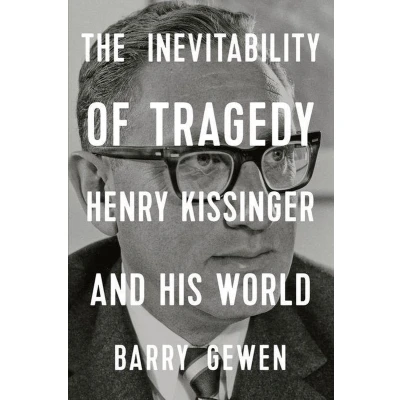
A new portrait of Henry Kissinger focusing on the fundamental ideas underlying his policies: Realism, balance of power, and national interest. Few public officials have provoked such intense controversy as Henry Kissinger. During his time in the Nixon and Ford administrations, he came to be admired and hated in equal measure. Notoriously, he believed that foreign affairs ought to be based primarily on the power relationships of a situation, not simply on ethics. He went so far as to argue that under certain circumstances America had to protect its national interests even if that meant repressing other countries’ attempts at democracy. For this reason, many today on both the right and left dismiss him as a latter-day Machiavelli, ignoring the breadth and complexity of his thought. With The Inevitability of Tragedy, Barry Gewen corrects this shallow view, presenting the fascinating story of Kissinger’s development as both a strategist and an intellectual and examining his unique role in government through his ideas. It analyzes his contentious policies in Vietnam and Chile, guided by a fresh understanding of his definition of Realism, the belief that world politics is based on an inevitable, tragic competition for power. Crucially, Gewen places Kissinger’s pessimistic thought in a European context. He considers how Kissinger was deeply impacted by his experience as a refugee from Nazi Germany, and explores the links between his notions of power and those of his mentor, Hans Morgenthau—the father of Realism—as well as those of two other German-Jewish émigrés who shared his concerns about the weaknesses of democracy: Leo Strauss and Hannah Arendt. The Inevitability of Tragedy offers a thoughtful perspective on the origins of Kissinger’s sober worldview and argues that a reconsideration of his career is essential at a time when American foreign policy lacks direction.
Bol PartnerA fresh portrait of Henry Kissinger focusing on the fundamental ideas underlying his policies: realism, balance of power and national interest. The Inevitability of Tragedy is a fascinating intellectual biography that examines Henry Kissinger’s role in American government through his ideas. It analyses the continuing controversies surrounding Kissinger’s policies in such places as Vietnam and Chile by offering an understanding of his definition of realism; his belief that foreign affairs must be conducted through a balance of power; and his view that promoting democracy is likely to result in defeats for the United States. Barry Gewen places Kissinger’s ideas in a European context by tracing them through his experience as a refugee from Nazi Germany and exploring the links between his notions of power and those of his mentor, Hans Morgenthau, as well as those of two other German-Jewish émigrés—Leo Strauss and Hannah Arendt—who shared his concerns about the weaknesses of democracy.
 Prijshistorie
* Prijshistorie bevat geen data van Amazon, Amazon Marketplace.
Prijzen voor het laatst bijgewerkt op:
 Gerelateerde resultaten
 Productspecificaties


