

€ 12,05 Gratis verzending

Uitgelicht
|
|
12,05 |
Naar shop
|

|
12,05 |
Naar shop
|

|
12,50 |
Naar shop
|
| VERGELIJK ALLE AANBIEDERS (3) | ||
 Beschrijving
Vergelijk aanbieders (3)
€ 12,05 Gratis verzending
€ 12,05 Gratis verzending
€ 12,50 € 2,99 verzendkosten Totaal € 15,49
Winkels met andere maten
Beschrijving
(1)
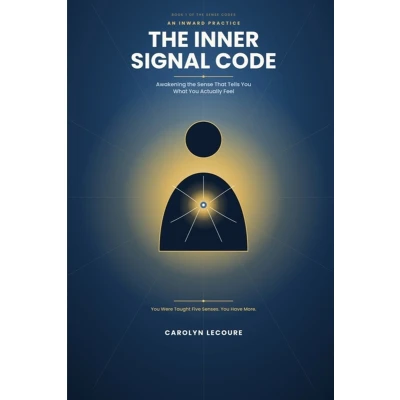
You were taught you have five senses. That number is 2,300 years old, and it's wrong. Aristotle gave us the list - sight, hearing, touch, taste, smell. In 1906, a British physiologist named Charles Sherrington quietly reorganized the whole picture, naming entire sensory systems Aristotle's list had no room for. He won a Nobel Prize in 1932. Most people have still never heard of the senses he described. This book is about the first of them: interoception, your sense of your own internal state. Hunger. Thirst. Your heartbeat. The tightness in your chest before you consciously realize you're anxious. And here's the finding that makes this book different from everything else on the shelf. You've been told to "trust your body" and "listen to your gut." Modern research is more humbling than that: how well you believe you read your body turns out to be largely independent of how well you actually do - and the gap between those two things predicts anxiety. That's not a reason to distrust your body. It's a reason to get better at reading it - which is a real, trainable skill with published evidence behind it. Inside, you'll find: - A 5-minute daily practice you can start tonight, adapted from published interoceptive training research - The real history: Aristotle's list, Sherrington's 1906 Nobel work, and the modern insula neuroscience that followed - Why "trust your body" is weaker advice than it sounds - and what to do instead - An honest look at "body wisdom" marketing claims - A ready-to-use affirmation library, organized by theme - A 21-day challenge with a built-in progress tracker "It taught me to read my body instead of just telling me to trust it. Completely different book." - B.K. Five minutes. One signal. Read it right.
 Prijshistorie
 * Prijshistorie bevat geen data van Amazon, Amazon Marketplace.
Prijzen voor het laatst bijgewerkt op:
 Gerelateerde resultaten
 Productspecificaties


