
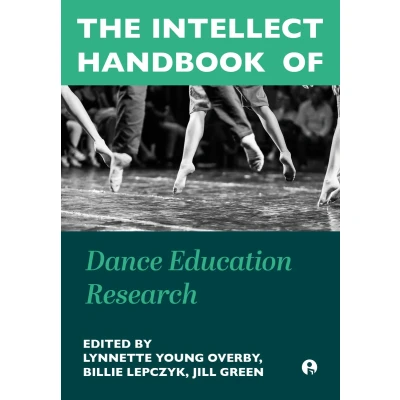
The Intellect Handbook of Dance Education Research
Uitgelicht

|
175,00 |
Naar shop
|

|
178,61 |
Naar shop
|

|
178,61 |
Naar shop
|
| VERGELIJK ALLE AANBIEDERS (3) | ||
 Beschrijving
Bol
A global exploration of dance education research, its methodologies and its impact on the field. The Intellect Handbook of Dance Education Research is an essential resource for students, educators and advocates, offering a broad survey of research methodologies alongside real-world applications from across the globe. This volume brings together voices from both seasoned and emerging scholars, highlighting the diversity of dance research in countries including Korea, South Africa, Jamaica, India, Brazil, Slovenia and beyond. Divided into four parts, the book first examines foundational research methodologies, spanning mixed-method approaches as well as innovative techniques like portraiture and a/r/tography. The second section presents dance education research in practice, exploring history, choreography and community-based initiatives. The third part showcases international perspectives, offering snapshots of research traditions from contrasting cultural contexts. Finally, the fourth section elaborates on the role of dance in social justice, illustrating how movement-based research can drive cultural and societal change. A vital tool for researchers, policymakers and educators alike, this handbook underscores the significance of dance as a transformative force in education, fostering collaboration and meaningful impact in diverse communities. Lynnette Young Overby, Ph.D., sits on the National Council on the Humanities and serves as a research associate with the Arnhold Institute for Dance Education, Research, Policy & Leadership at Columbia University, USA. She is a recipient of an Honorary Doctor of Fine Arts from the University of Delaware, USA. Billie Lepczyk, Ed.D., CMA, is Professor of Dance, a member of the Academy of Teaching Excellence at Virginia Tech, USA and a Teacher College Fellow of Columbia University, USA. Jill Green, Ph.D., is Professor Emerita at the University of North Carolina, Greensboro, USA. Her research is widely disseminated, and she has received a number of teaching and research awards, including a Fulbright Scholarship. A review of dance education research methodologies with examples and exemplars from the field and an important resource for dance students, professionals and advocates. The editors recognized the need for a book of this type – one that would not only provide examples of a variety of dance education research projects, but also present a broad look at methodologies. In addition, the book would not only focus on dance education research in the USA, but more broadly with examples of dance research from several different countries. The curated book includes the voices of both seasoned professionals and newer scholars in the field, with examples of dance research from a number of different countries. The contributions represent several countries including Korea, South Africa, United States of America, Jamaica, India, the United Kingdom, Brazil and Slovenia, underscore the global relevance and significance of research in dance education. This book is divided into four parts. The first part focuses on dance education research and methodologies and is divided into three sections. With an introduction by Jill Green, the chapters that follow provide an overview of research types including the more traditional, qualitative, quantitative and mixed, and other methods such as portraiture and a/r/tography. Part II, introduced by Lynnette Young Overby, includes examples of dance education research that incorporate qualitative, quantitative, and/or mixed methods. Three sections covering dance education research applications in the areas of history and culture, dance teaching and choreography and community based research follow. Part III of the Handbook of Dance Education Research provides insight into dance education that takes place in several countries. This part is introduced by Peter Cook, Associate Deputy Chancellor, Southern Cross University, Australia. The collection of chapters within this part of the Handbook of Dance Education Research provides snapshots of research practices from contrasting international areas, and with a variety of approaches and paradigms. Part IV includes chapters focused on Social Justice dance education practice and research. This part is introduced by Alfdaniel Mivule Basibye Mabingo, Makerere University, Uganda. These chapters push the boundaries of dance education research to promote meaning and social change. They provide substantive examples of the impact dance education research can have in response to social and cultural issues. This book will be a key resource for university students, professors, practitioners and policy makers in organizations and in school systems. It will inspire future dance education researchers to conduct research that is collaborative, impactful, inclusive and diverse – research that will solidify the place of dance as an integral part of each person’s education.


 Beschrijving
(1)
Beschrijving
(1)
A global exploration of dance education research, its methodologies and its impact on the field. The Intellect Handbook of Dance Education Research is an essential resource for students, educators and advocates, offering a broad survey of research methodologies alongside real-world applications from across the globe. This volume brings together voices from both seasoned and emerging scholars, highlighting the diversity of dance research in countries including Korea, South Africa, Jamaica, India, Brazil, Slovenia and beyond. Divided into four parts, the book first examines foundational research methodologies, spanning mixed-method approaches as well as innovative techniques like portraiture and a/r/tography. The second section presents dance education research in practice, exploring history, choreography and community-based initiatives. The third part showcases international perspectives, offering snapshots of research traditions from contrasting cultural contexts. Finally, the fourth section elaborates on the role of dance in social justice, illustrating how movement-based research can drive cultural and societal change. A vital tool for researchers, policymakers and educators alike, this handbook underscores the significance of dance as a transformative force in education, fostering collaboration and meaningful impact in diverse communities. Lynnette Young Overby, Ph.D., sits on the National Council on the Humanities and serves as a research associate with the Arnhold Institute for Dance Education, Research, Policy & Leadership at Columbia University, USA. She is a recipient of an Honorary Doctor of Fine Arts from the University of Delaware, USA. Billie Lepczyk, Ed.D., CMA, is Professor of Dance, a member of the Academy of Teaching Excellence at Virginia Tech, USA and a Teacher College Fellow of Columbia University, USA. Jill Green, Ph.D., is Professor Emerita at the University of North Carolina, Greensboro, USA. Her research is widely disseminated, and she has received a number of teaching and research awards, including a Fulbright Scholarship. A review of dance education research methodologies with examples and exemplars from the field and an important resource for dance students, professionals and advocates. The editors recognized the need for a book of this type – one that would not only provide examples of a variety of dance education research projects, but also present a broad look at methodologies. In addition, the book would not only focus on dance education research in the USA, but more broadly with examples of dance research from several different countries. The curated book includes the voices of both seasoned professionals and newer scholars in the field, with examples of dance research from a number of different countries. The contributions represent several countries including Korea, South Africa, United States of America, Jamaica, India, the United Kingdom, Brazil and Slovenia, underscore the global relevance and significance of research in dance education. This book is divided into four parts. The first part focuses on dance education research and methodologies and is divided into three sections. With an introduction by Jill Green, the chapters that follow provide an overview of research types including the more traditional, qualitative, quantitative and mixed, and other methods such as portraiture and a/r/tography. Part II, introduced by Lynnette Young Overby, includes examples of dance education research that incorporate qualitative, quantitative, and/or mixed methods. Three sections covering dance education research applications in the areas of history and culture, dance teaching and choreography and community based research follow. Part III of the Handbook of Dance Education Research provides insight into dance education that takes place in several countries. This part is introduced by Peter Cook, Associate Deputy Chancellor, Southern Cross University, Australia. The collection of chapters within this part of the Handbook of Dance Education Research provides snapshots of research practices from contrasting international areas, and with a variety of approaches and paradigms. Part IV includes chapters focused on Social Justice dance education practice and research. This part is introduced by Alfdaniel Mivule Basibye Mabingo, Makerere University, Uganda. These chapters push the boundaries of dance education research to promote meaning and social change. They provide substantive examples of the impact dance education research can have in response to social and cultural issues. This book will be a key resource for university students, professors, practitioners and policy makers in organizations and in school systems. It will inspire future dance education researchers to conduct research that is collaborative, impactful, inclusive and diverse – research that will solidify the place of dance as an integral part of each person’s education.
 Productspecificaties
 Prijshistorie
* Prijshistorie bevat geen data van Amazon, Amazon Marketplace.
Prijzen voor het laatst bijgewerkt op:
 Gerelateerde resultaten


