


€ 15,00 € 2,99 verzendkosten Totaal € 17,99

Gesponsorde links
|
|
15,00 |
Naar shop
|

|
15,68 |
Naar shop
|

|
15,68 |
Naar shop
|
| VERGELIJK ALLE AANBIEDERS (3) | ||
 Beschrijving
Vergelijk aanbieders (3)
Gesponsorde links · Sommige shops betalen ons een vergoeding
€ 15,00 € 2,99 verzendkosten Totaal € 17,99
€ 15,68 Gratis verzending
€ 15,68 Gratis verzending
Winkels met andere maten
Beschrijving
(1)
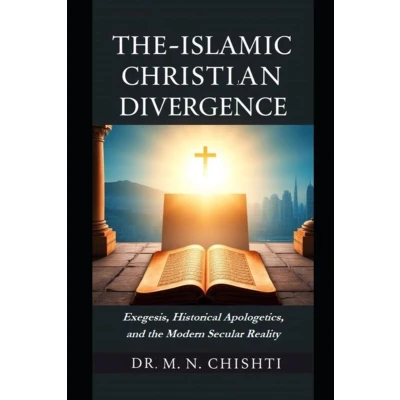
The Islamic-Christian Divergence Exegesis, Historical Apologetics, and the Modern Secular Reality Few figures have shaped the religious and intellectual history of humanity as profoundly as Jesus of Nazareth. Yet the two great traditions that honour him reach fundamentally different conclusions about who he was, what he taught, what happened to him, and what his mission ultimately means. The Islamic-Christian Divergence offers a sustained comparative examination of these questions from Islamic, Christian, and historical perspectives. Beginning with the Jewish world of Jesus and the emergence of the earliest Christian movement, the book traces the development of Christian Christology from the New Testament through the early Church councils. It then examines the Qur'anic portrayal of Jesus as Messiah, prophet, servant, Word from God, and son of Mary, alongside the Qur'anic critique of divine sonship, Trinity, and theological excess. At the heart of the study lies the most consequential point of disagreement: the crucifixion and resurrection. The book examines the historical evidence for Jesus's execution, the Qur'anic account in 4:157-158, classical Muslim interpretations of shubbiha lahum, Christian resurrection claims, and the limits of historical method when confronting claims of divine action. Scripture receives equally careful attention. The nature of the Injīl, the formation and transmission of the New Testament, manuscript evidence, textual variants, canon formation, and the Islamic concept of tahrīf are examined without reducing either tradition to caricature. The study then turns toward modernity. Historical criticism, secularism, materialism, religious pluralism, Islamic reformism, tajdīd, and ijtihād raise questions that medieval Muslim-Christian polemics could not have anticipated. The book therefore asks whether Muslims and Christians can retain serious theological convictions while engaging one another honestly in a pluralistic world. This is not a book about pretending that Islam and Christianity are the same. Nor is it an invitation to religious hostility. It is an attempt to understand why these traditions diverged, where their arguments are strongest and weakest, what history can establish, what theology must decide, and what remains possible beyond disagreement. At the centre of the entire inquiry stands one enduring question: Who is Jesus?
 Prijshistorie
* Prijshistorie bevat geen data van Amazon, Amazon Marketplace.
Prijzen voor het laatst bijgewerkt op:
 Gerelateerde resultaten
 Productspecificaties


