


€ 102,74 € 95,99 Gratis verzending

Uitgelicht
|
|
102,74
95,99 |
Naar shop
|

|
104,99 |
Naar shop
|

|
104,99 |
Naar shop
|
| VERGELIJK ALLE AANBIEDERS (3) | ||
 Beschrijving
Vergelijk aanbieders (3)
€ 102,74 € 95,99 Gratis verzending
€ 104,99 Gratis verzending
€ 104,99 Gratis verzending
Winkels met andere maten
Beschrijving
(1)
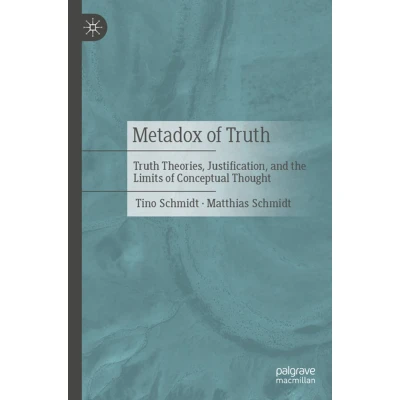
The starting point of this book is the question of to what extent knowledge can be objectively justified and to what extent our statements, in their claim to be true, must necessarily presuppose a reference to a world given independently of our subjective experience. The starting point of this book is the question of to what extent knowledge can be objectively justified and to what extent our statements, in their claim to be true, must necessarily presuppose a reference to a world given independently of our subjective experience. Overall, it is to be shown that, first, every theory of truth must in some way be based on correspondence-theoretical assumptions (i.e., truth is the agreement of a statement or thought with reality). Second, however, that every form of the correspondence theory necessarily leads either to internally contradictory systems (especially Kant, Fichte, Hegel, Aristotle, and Popper) or to self-contained doctrines that are, by definition, not falsifiable (Thomas Aquinas, the Stoics, Plato, Wittgenstein, Habermas). Conclusion: Since every epistemology must include correspondence-theoretical assumptions (e.g., the ontological principle of a correspondence between being and consciousness), there is always an explanatory gap inherent in them.
 Prijshistorie
 * Prijshistorie bevat geen data van Amazon, Amazon Marketplace.
Prijzen voor het laatst bijgewerkt op:
 Gerelateerde resultaten
 Productspecificaties


