
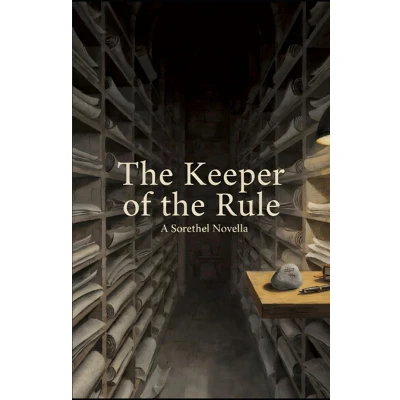
the Keeper of Rule: A Sorethel Novella
Uitgelicht

|
7,51 |
Naar shop
|

|
7,51 |
Naar shop
|

|
9,00 |
Naar shop
|
| VERGELIJK ALLE AANBIEDERS (3) | ||
 Beschrijving
Bol
Mervet has kept the rolls of the Archive of Arkit for thirty years. She decides what may be written into the record and what must be struck from it as unverifiable, and she has buried, early in her life, the people the rolls failed when they failed - the community erased by a false claim the record could not refuse. She keeps the rule because she has seen the world without it. She is not a zealot. She is not cruel. She is right, and being right has never once been cheap. When a settlement's records come up to be struck - the unrecorded asking to be let in, their lives true but uncorroborated - Mervet must choose between a person in front of her and the principle that protects every person after. To admit the records on sympathy would break the rolls for everyone who comes next. To strike >A spare, unsparing novella that argues against its own series' grain: that the rule applied evenly is the only even-handed shield the powerless have, that the keeper of order can be the moral one and pay for it, and that two true things - the record erases, and the record protects - can stand in the same hall and neither one cancel the other.


 Beschrijving
(1)
Beschrijving
(1)
Mervet has kept the rolls of the Archive of Arkit for thirty years. She decides what may be written into the record and what must be struck from it as unverifiable, and she has buried, early in her life, the people the rolls failed when they failed - the community erased by a false claim the record could not refuse. She keeps the rule because she has seen the world without it. She is not a zealot. She is not cruel. She is right, and being right has never once been cheap. When a settlement's records come up to be struck - the unrecorded asking to be let in, their lives true but uncorroborated - Mervet must choose between a person in front of her and the principle that protects every person after. To admit the records on sympathy would break the rolls for everyone who comes next. To strike >A spare, unsparing novella that argues against its own series' grain: that the rule applied evenly is the only even-handed shield the powerless have, that the keeper of order can be the moral one and pay for it, and that two true things - the record erases, and the record protects - can stand in the same hall and neither one cancel the other.
 Productspecificaties
 Prijshistorie
* Prijshistorie bevat geen data van Amazon, Amazon Marketplace.
Prijzen voor het laatst bijgewerkt op:
 Gerelateerde resultaten


