
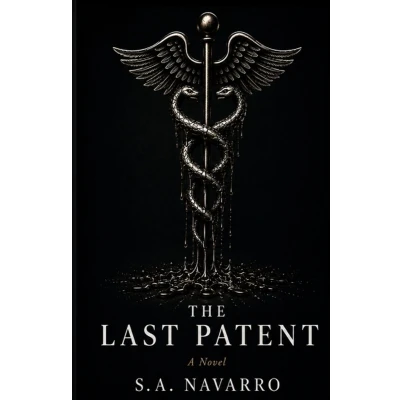
The Last Patent
Uitgelicht

|
16,00 |
Naar shop
|

|
17,34 |
Naar shop
|

|
17,34 |
Naar shop
|
| VERGELIJK ALLE AANBIEDERS (3) | ||
 Beschrijving
Bol
Daniel Morrow was the kind of man who kept the napkin. The napkin he sketched his first patent on at a dinner in Boston in 1994. Twenty years later, that napkin - and the fourteen patents it led to - sat at the center of a four-million-dollar lawsuit filed by the business partner he had trusted most. The fabricated emails were convincing. The judgment was not in his favor. The company he had spent two decades building was gone within eighteen months. At his lowest point, during a legal recess in Lima, Peru, Daniel meets Isabella Vargas. She is twenty-nine, warm, and impossibly good at making him feel like himself again. His friends warn him. His daughter warns him. He listens to all of them and marries her anyway - because he genuinely, completely believes in her. He is still believing when his body is found in the garage. The death is ruled a suicide. His daughter Dana is not convinced. The Last Patent is a literary psychological novel about truth, provability, and the distance between them. Told across three timelines - Daniel's methodical documentation of his suspicions, Dana's years-long investigation, and Isabella's own reckoning - the novel asks what it means to love someone you cannot fully know, and what it costs to build a case for something you can feel but cannot prove. Part legal drama, part psychological suspense, part family inheritance story, The Last Patent moves between the courtrooms of Boston, the hotel bars of Lima, and the quiet domestic spaces where catastrophe becomes administrative before it becomes emotional. It is a novel about intelligent people making believable mistakes, about grief that becomes procedural, and about the notebooks we keep when we know something is wrong but cannot yet say what. For readers of Tana French, Julia Phillips, and early John Grisham.


 Beschrijving
(1)
Beschrijving
(1)
Daniel Morrow was the kind of man who kept the napkin. The napkin he sketched his first patent on at a dinner in Boston in 1994. Twenty years later, that napkin - and the fourteen patents it led to - sat at the center of a four-million-dollar lawsuit filed by the business partner he had trusted most. The fabricated emails were convincing. The judgment was not in his favor. The company he had spent two decades building was gone within eighteen months. At his lowest point, during a legal recess in Lima, Peru, Daniel meets Isabella Vargas. She is twenty-nine, warm, and impossibly good at making him feel like himself again. His friends warn him. His daughter warns him. He listens to all of them and marries her anyway - because he genuinely, completely believes in her. He is still believing when his body is found in the garage. The death is ruled a suicide. His daughter Dana is not convinced. The Last Patent is a literary psychological novel about truth, provability, and the distance between them. Told across three timelines - Daniel's methodical documentation of his suspicions, Dana's years-long investigation, and Isabella's own reckoning - the novel asks what it means to love someone you cannot fully know, and what it costs to build a case for something you can feel but cannot prove. Part legal drama, part psychological suspense, part family inheritance story, The Last Patent moves between the courtrooms of Boston, the hotel bars of Lima, and the quiet domestic spaces where catastrophe becomes administrative before it becomes emotional. It is a novel about intelligent people making believable mistakes, about grief that becomes procedural, and about the notebooks we keep when we know something is wrong but cannot yet say what. For readers of Tana French, Julia Phillips, and early John Grisham.
 Productspecificaties
 Prijshistorie
* Prijshistorie bevat geen data van Amazon, Amazon Marketplace.
Prijzen voor het laatst bijgewerkt op:
 Gerelateerde resultaten


