

€ 23,76 Gratis verzending

Gesponsorde links
|
|
23,76 |
Naar shop
|

|
23,76 |
Naar shop
|

|
24,99 |
Naar shop
|
| VERGELIJK ALLE AANBIEDERS (3) | ||
 Beschrijving
Vergelijk aanbieders (3)
Gesponsorde links · Sommige shops betalen ons een vergoeding
€ 23,76 Gratis verzending
€ 23,76 Gratis verzending
€ 24,99 € 2,99 verzendkosten Totaal € 27,98
Winkels met andere maten
Beschrijving
(1)
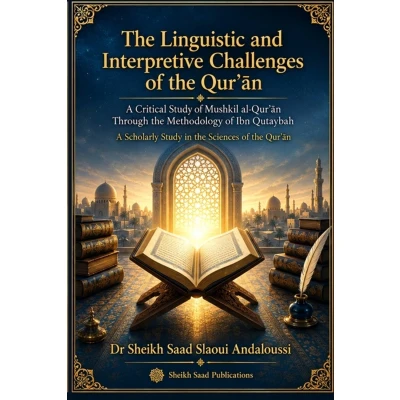
The Qur'an invites reflection, yet some of its verses can appear difficult, ambiguous, or even contradictory to readers who lack the linguistic and interpretive tools of the classical tradition. The Linguistic and Interpretive Challenges of the Qur'an: A Critical Study of Mushkil al-Qur'an Through the Methodology of Ibn Qutaybah explores one of the most important disciplines in the sciences of the Qur'an: the study of passages whose meanings appear difficult until they are examined through Arabic language, rhetoric, context, and the interpretive methods of the early scholars. At the center of this study stands Ibn Qutaybah (d. 276 AH), whose Ta'wil Mushkil al-Qur'an became one of the foundational works of the field. Writing in an age of intense theological and intellectual debate, Ibn Qutaybah answered claims of contradiction, linguistic error, and incoherence by demonstrating how Qur'anic expression operates according to the established conventions of Arabic. The study examines muḥkam, mutashabih, and mushkil; the limits of translation; semantic density; ellipsis; metaphor; polysemy; rare vocabulary; rhetorical structure; narrative perspective; the reconciliation of apparently conflicting verses; Arabic poetry as linguistic evidence; and the treatment of verses involving divine attributes, reason, and human experience. Rather than treating interpretive difficulty as a defect in revelation, this work shows how many apparent problems arise from limitations in the reader's linguistic knowledge, contextual awareness, or methodological assumptions. It also demonstrates why the methods developed by classical Muslim scholars remain deeply relevant for contemporary readers who often encounter the Qur'an primarily through translation. Readers will explore: - the foundations of Mushkil al-Qur'an - the distinction between muḥkam and mutashabih - Ibn Qutaybah's intellectual project and interpretive methodology - Arabic grammar, rhetoric, ellipsis, metaphor, and semantic range - alleged contradictions and methods of reconciliation - the limits of translation and loss of linguistic nuance - Qur'anic coherence and the discipline of responsible interpretation >This is a scholarly yet accessible study for students of Qur'anic sciences, tafsir, Arabic, Islamic theology, and anyone seeking to understand how the classical tradition approached difficult passages with rigor, reverence, and confidence in the coherence of revelation.
 Prijshistorie
* Prijshistorie bevat geen data van Amazon, Amazon Marketplace.
Prijzen voor het laatst bijgewerkt op:
 Gerelateerde resultaten
 Productspecificaties


