

€ 12,77 Gratis verzending

Uitgelicht
|
|
12,77 |
Naar shop
|

|
13,50 |
Naar shop
|
| VERGELIJK ALLE AANBIEDERS (2) | ||
 Beschrijving
Vergelijk aanbieders (2)
€ 12,77 Gratis verzending
€ 13,50 € 2,99 verzendkosten Totaal € 16,49
Winkels met andere maten
Beschrijving
(1)
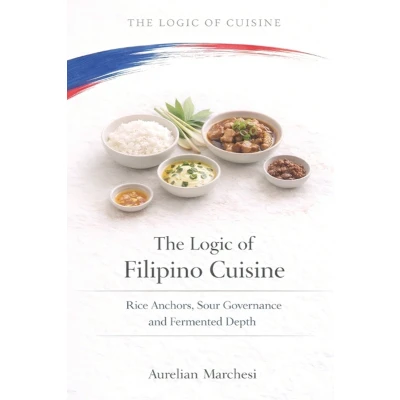
Filipino cuisine is often described as bold, sour, and intensely savory. This book argues something more precise. Filipino food is not built on excess-it is built on regulation and anchoring. The Logic of Filipino Cuisine examines one of Southeast Asia's most dynamic culinary systems as a structure designed to stabilize intensity under tropical pressure. In heat and humidity, where spoilage accelerates and inputs vary from island to island, Filipino cooking evolved a repeatable solution: keep the meal coherent by pairing intensity with stabilizers. Rather than focusing on recipes or iconic dish lists, this book reveals the invisible rules that govern the cuisine: - Why rice is infrastructure-not a side - Why fermented sauces and pastes create backbone, not noise - Why vinegar governs richness as a control valve against fatigue - Why coconut fat cushions intensity only when contrast remains regulated - Why clear sour broths deliver depth without heaviness - Why herbs and chili function as lift and reset, not decoration >Dishes such as adobo, sinigang, kinilaw, kare-kare, and pancit appear only as evidence-outcomes of a deeper logic rather than instructions to follow. Written as narrative non-fiction rather than a manual, this book is for: - Serious home cooks who want to understand why food works - Chefs seeking transferable culinary logic across cuisines - Readers interested in food as culture, systems, and structure > The Logic of Filipino Cuisine does not teach you how to cook Filipino food. It teaches you how to understand how Filipino cuisine works-so intensity stays breathable, the palate stays awake, and meals remain repeatable under pressure. This volume appears in the expanded format of the series, with two additional chapters and deeper treatment of staple dishes, allowing the cuisine's internal logic to unfold more fully
 Prijshistorie
 * Prijshistorie bevat geen data van Amazon.
Prijzen voor het laatst bijgewerkt op:
 Gerelateerde resultaten
 Productspecificaties


