


€ 29,99 Gratis verzending

Gesponsorde links
|
|
29,99 |
Naar shop
|

|
31,32 |
Naar shop
|

|
31,32 |
Naar shop
|
| VERGELIJK ALLE AANBIEDERS (3) | ||
 Beschrijving
Vergelijk aanbieders (3)
Gesponsorde links · Sommige shops betalen ons een vergoeding
€ 29,99 Gratis verzending
€ 31,32 Gratis verzending
€ 31,32 Gratis verzending
Winkels met andere maten
Beschrijving
(1)
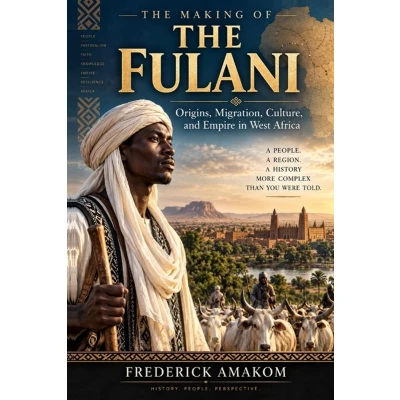
Who are the Fulani-and where did they come from?Few questions about West African history have produced as many competing answers.The Fulani, known across different regions as Fulɓe, Fula, Fulani, and Peul, are one of the most geographically widespread peoples of West Africa and the Sahel. Their history stretches across modern national borders and encompasses pastoralists, farmers, traders, scholars, migrants, settlers, political leaders, and urban communities.But the story of the Fulani cannot be explained by a single migration, a single ancestor, or a single homeland.The Making of the Fulani examines how a people and their identity developed through centuries of movement, settlement, cultural exchange, pastoralism, intermarriage, Islamic scholarship, political transformation, and empire.The book investigates the major questions surrounding Fulani history: - What can language, oral traditions, archaeology, and historical records tell us about Fulani origins?- How deep are the Fulani's connections to West Africa and the Sahel?- What were their historical relationships with North African and Amazigh peoples?- Do traditions connecting the Fulani to Egypt, Arabia, or ancient Israel withstand historical scrutiny?- What does modern genetic research reveal about Fulani ancestry and population history?- How did Fulani communities spread across the Sahel and establish settlements?- How did Islam shape Fulani intellectual, social, and political life?- What produced the nineteenth-century jihad movements associated with Usman dan Fodio?- How did the Sokoto Caliphate become one of the most important states in nineteenth-century West Africa?- What is Pulaaku, and how has it shaped Fulani ideas of character, dignity, restraint, and leadership?- How did colonial conquest transform Fulani political authority, pastoral mobility, and identity?- What does it mean to be Fulani in contemporary Africa?The book also challenges simplistic assumptions.Migration does not automatically mean foreignness. Cultural connection does not automatically prove biological descent. Islam does not make a people Arab. Genetic ancestry does not by itself define ethnic identity. And historical political power cannot be attributed to every individual member of an ethnic group.Instead, The Making of the Fulani brings different forms of evidence into conversation to reconstruct a complex African history.From the pastoral landscapes of the Sahel to the intellectual networks of West African Islam, from the migrations of Fulani communities to the rise of the Sokoto Caliphate, and from colonial disruption to contemporary debates about identity and belonging, this book follows the historical processes that shaped the Fulani.This is not simply a book about where the Fulani came from.It is a book about how a people was made.A history of origins, movement, culture, power, and identity in West Africa.
 Prijshistorie
* Prijshistorie bevat geen data van Amazon, Amazon Marketplace.
Prijzen voor het laatst bijgewerkt op:
 Gerelateerde resultaten
 Productspecificaties


