


€ 14,00 € 2,99 verzendkosten Totaal € 16,99

Gesponsorde links
|
|
14,00 |
Naar shop
|

|
14,73 |
Naar shop
|

|
14,73 |
Naar shop
|
| VERGELIJK ALLE AANBIEDERS (3) | ||
 Beschrijving
Vergelijk aanbieders (3)
Gesponsorde links · Sommige shops betalen ons een vergoeding
€ 14,00 € 2,99 verzendkosten Totaal € 16,99
€ 14,73 Gratis verzending
€ 14,73 Gratis verzending
Winkels met andere maten
Beschrijving
(1)
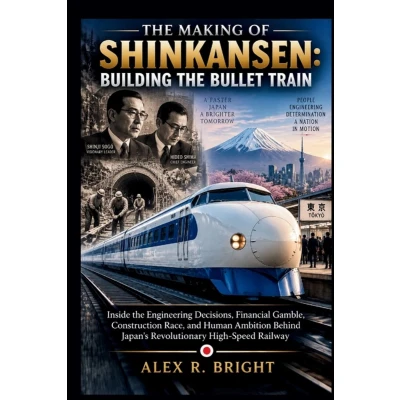
What if the world's most famous bullet train began not with a dream of speed, but with a railway running out of room?By the 1950s, Japan was changing at breathtaking speed. Factories were expanding. Cities were swelling. Passenger and freight traffic crowded the vital Tokaido corridor between Tokyo and Osaka. The obvious answer was to improve the railway Japan already had.Instead, a small group of railway leaders and engineers backed a far more dangerous idea: build an entirely new one.THE MAKING OF THE SHINKANSEN: BUILDING THE BULLET TRAIN tells the gripping story behind the engineering gamble that changed passenger rail forever.Follow Japanese National Railways president Shinji Sogo and engineer Hideo Shima as they fight to turn an ambitious proposal into a working transportation system. Discover why Japan abandoned conventional narrow gauge for the new line, separated high-speed trains from ordinary traffic, eliminated level crossings, redesigned signaling and braking, and treated the train, track, electricity, maintenance, and safety systems as parts of one enormous machine.But engineering was only half the battle.Construction began in 1959. Costs climbed. An $80 million World Bank loan became part of a project whose eventual price reached approximately 380 billion. Careers were damaged by the financial controversy, even as thousands of workers raced to complete the railway.Then came October 1, 1964.Days before the Tokyo Olympics introduced a transformed Japan to the world, the first Tokaido Shinkansen carried paying passengers between Tokyo and Shin-Osaka at speeds that once seemed unrealistic for everyday railway travel.Could it remain safe? Would passengers come? Could the enormous investment ever justify itself?The answers would reshape transportation far beyond Japan.Inside this book, you'll discover the construction challenges, prototype tests, financial pressures, engineering breakthroughs, earthquake protections, commercial success, later generations of trains, and worldwide high-speed rail movement that followed.Perfect for readers fascinated by engineering, trains, transportation history, Japanese innovation, infrastructure, and the human decisions behind machines that changed everyday life.The Shinkansen became famous because it was fast.The real story is how Japan made extraordinary speed feel ordinary.Get your copy today and discover what it actually took to build the bullet train.
 Prijshistorie
* Prijshistorie bevat geen data van Amazon, Amazon Marketplace.
Prijzen voor het laatst bijgewerkt op:
 Gerelateerde resultaten
 Productspecificaties


