


€ 17,00 € 2,99 verzendkosten Totaal € 19,99

Uitgelicht
|
|
17,00 |
Naar shop
|

|
17,56 |
Naar shop
|

|
17,56 |
Naar shop
|
| VERGELIJK ALLE AANBIEDERS (3) | ||
 Beschrijving
Vergelijk aanbieders (3)
€ 17,00 € 2,99 verzendkosten Totaal € 19,99
€ 17,56 Gratis verzending
€ 17,56 Gratis verzending
Winkels met andere maten
Beschrijving
(1)
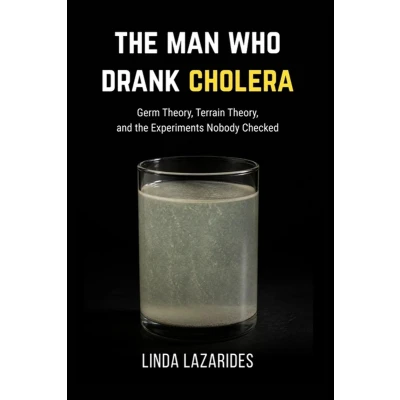
In 1892, a seventy-four-year-old professor drank a glass containing a thousand million live cholera bacteria. He wanted to prove a point. Six weeks earlier, cholera had killed 8,200 people in Hamburg. Max von Pettenkofer got a week of diarrhoea and declared himself vindicated. His assistant repeated the experiment on a stage in front of a hundred people and nearly died. In Paris the same year, a future Nobel laureate drank the same culture, felt nothing, and offered it to two volunteers. The first was fine. The second almost didn't survive. Same organism. Same dose. Same year. Three different answers. A century on, we still explain illness by naming the organism found at the scene. But you inhale several thousand living bacteria every day, including Staphylococcus, Streptococcus and Aspergillus. You touch your own face twenty times an hour. A quarter of the world carries tuberculosis and most never develop it. The most common virus in the human body is present in the majority of healthy adults and has never been linked to any disease at all. So what actually decides? This book follows that question through fifteen chapters and examines the arguments. You'll find out: why vitamin A was called "the anti-infective vitamin" for twenty years, and what happened to that finding; why First World War surgeons discovered that antiseptics made wounds worse, and what they did instead; why a Nobel Prize was awarded for a stomach bacterium that nine in ten carriers never get an ulcer from; how a resident yeast can brew alcohol inside you; and why, in tuberculosis, leprosy, river blindness and rheumatic fever, the damage is done by your own defences rather than by the organism. This is not a book claiming germs are harmless. One chapter is about botulism, aflatoxin and the toxin that shuts down children's kidneys - cases where the organism needn't even be present to kill. Another examines the claim that there are no pathogens at all, and why its author made it. Nor is this a book defending textbook medicine. The chapter on viruses takes the sceptical case seriously, including the transmission experiments that repeatedly failed and were quietly set aside. When studies claimed success, were there even any viruses in the samples? Every technical term is explained where it appears, and each chapter closes with its own glossary and full references. No prior science is assumed. When the answer finally comes, it may challenge assumptions you never thought to question. Exposure is constant, universal and impossible to avoid. It explains arrival. It does not explain outcome. And outcome is the only part of the equation we can do anything about.
 Prijshistorie
 * Prijshistorie bevat geen data van Amazon, Amazon Marketplace.
Prijzen voor het laatst bijgewerkt op:
 Gerelateerde resultaten
 Productspecificaties


