


gebruikt € 22,39 Gratis verzending

Uitgelicht
|
|
22,39 |
Naar shop
|

|
24,98 |
Naar shop
|

|
24,98 |
Naar shop
|
| VERGELIJK ALLE AANBIEDERS (3) | ||
 Beschrijving
Vergelijk aanbieders (3)
gebruikt € 22,39 Gratis verzending
€ 24,98 Gratis verzending
€ 24,98 Gratis verzending
Winkels met andere maten
Beschrijving
(1)
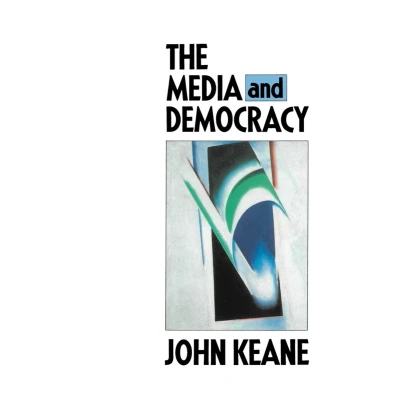
* This is an engaging and lively text which will interest a wide audience* The book presents a tightly woven historical and comparative analysis of the idea of the a liberty of the pressa in both European and American culture* Offers brilliantly original research. . In this essay, John Keane rethinks the relationship between the media and democracy. He opens up and explores a cluster of vital questions: where did the modern ideals of republican democracy and 'liberty of the press' originate? Have they been destroyed during the twentieth century by new forms of state censorship, or the emergence of transnational media conglomerates, or the growth of electronic media? Do the new digital technologies, satellite broadcasting and the convergence of broadcasting and telecommunications hinder or help these ideals? Is the free and equal communication of citizens through the media a feasible ideal at the end of the twentieth century? While these questions have long been neglected in social science and in the high-pressured world of print and electronic journalism, Keane restores them to the centre of political analysis and debate. He challenges many conventional assumptions of journalists, academics and policymakers. His essay sets out a radically new account of the importance of the media to democracy and elaborates a new conception of the public service model of communications - a model which would expose invisible power, publicize risks and facilitate 'a genuine commonwealth of forms of life, tastes and opinions'. The Media and Democracy is a remarkable book. It will be widely appreciated by students of democracy, politics and the media, as well as by all those interested in the expanding importantce of mass communications in contemporary society. In this essay, John Keane rethinks the relationship between the media and democracy. He opens up and explores a cluster of vital questions: where did the modern ideals of republican democracy and 'liberty of the press' originate? Have they been destroyed during the twentieth century by new forms of state censorship, or the emergence of transnational media conglomerates, or the growth of electronic media? Do the new digital technologies, satellite broadcasting and the convergence of broadcasting and telecommunications hinder or help these ideals? Is the free and equal communication of citizens through the media a feasible ideal at the end of the twentieth century? While these questions have long been neglected in social science and in the high-pressured world of print and electronic journalism, Keane restores them to the centre of political analysis and debate. He challenges many conventional assumptions of journalists, academics and policymakers. His essay sets out a radically new account of the importance of the media to democracy and elaborates a new conception of the public service model of communications - a model which would expose invisible power, publicize risks and facilitate 'a genuine commonwealth of forms of life, tastes and opinions'.
 Prijshistorie
 * Prijshistorie bevat geen data van Amazon, Amazon Marketplace.
Prijzen voor het laatst bijgewerkt op:
 Gerelateerde resultaten
 Productspecificaties


