
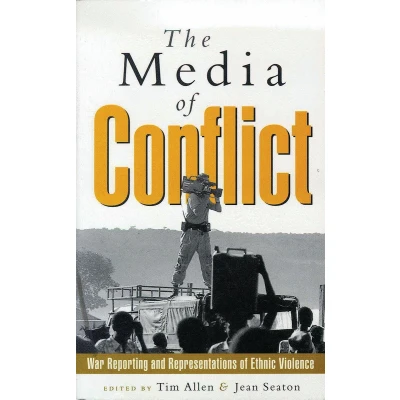
The Media of Conflict: War Reporting and Representations Ethnic Violence
Uitgelicht

|
46,99 |
Naar shop
|
| VERGELIJK ALLE AANBIEDERS (1) | ||
 Beschrijving
Bol
Examining how ethnic categorizations have been constructed, this work provides an introductory framework to war and the media.. Savage wars in Bosnia, Rwanda, Liberia, Iraq and many other places continue to fill our television screens and newspapers with terrible images of conflict. Despite the optimism about world peace, brought about by the collapse of super-power hostilities in the early 1990s, we seem to be encountering more wars, or at least wars that are more socially traumatic. All too often, the media suggest that these conflicts are caused by the return of primordial loyalties and hatreds after the collapse of the Cold War, or that mass slaughter can be explained by reference to the inherently evil nature of individuals or groups. This book counters this kind of nonsense, and asks why such views have gained a currency. It examines the role of the media in inciting conflicts within nations, as well as the adverse impacts of news reporting on international perceptions - and on policy-making. But it also reveals how valuable informed journalism can be. Above all, it highlights the dangers of basing analysis on vague assertions about deep human motivation, or on mythologies of the past and the present promoted by the protagonists themselves.


Vergelijk aanbieders (1)

 Beschrijving
(1)
Beschrijving
(1)
Examining how ethnic categorizations have been constructed, this work provides an introductory framework to war and the media.. Savage wars in Bosnia, Rwanda, Liberia, Iraq and many other places continue to fill our television screens and newspapers with terrible images of conflict. Despite the optimism about world peace, brought about by the collapse of super-power hostilities in the early 1990s, we seem to be encountering more wars, or at least wars that are more socially traumatic. All too often, the media suggest that these conflicts are caused by the return of primordial loyalties and hatreds after the collapse of the Cold War, or that mass slaughter can be explained by reference to the inherently evil nature of individuals or groups. This book counters this kind of nonsense, and asks why such views have gained a currency. It examines the role of the media in inciting conflicts within nations, as well as the adverse impacts of news reporting on international perceptions - and on policy-making. But it also reveals how valuable informed journalism can be. Above all, it highlights the dangers of basing analysis on vague assertions about deep human motivation, or on mythologies of the past and the present promoted by the protagonists themselves.
 Productspecificaties
| EAN |
|
|---|---|
| Maat |
|
 Prijshistorie
Prijzen voor het laatst bijgewerkt op:
 Gerelateerde resultaten


