
the Metaphysics of Human World According to Hannah Arendt
Uitgelicht

|
86,17 |
Naar shop
|

|
86,17 |
Naar shop
|

|
91,99 |
Naar shop
|
| VERGELIJK ALLE AANBIEDERS (3) | ||
 Beschrijving
Bol
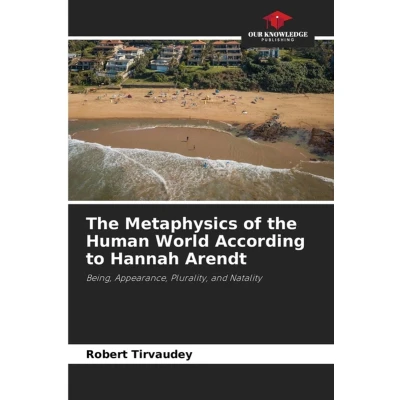
This essay offers a comprehensive reading of Hannah Arendt's thought based on a guiding hypothesis: her work outlines a form of post-metaphysical ontology-that is, a conception of being grounded neither in a transcendent foundation nor in a hierarchy between the sensible and intelligible worlds, but rather in the immanence of the common world, the plurality of perspectives, and the human capacity for judgment. The first part of the study highlights Arendt's reconfiguration of the concept of the world. Here, the world is understood not as an objective reality independent of subjects, but as the space of appearance where human beings reveal themselves to one another through speech and action. This conception breaks with the classical metaphysical tradition-particularly the Platonic one-by refusing to locate truth in an intelligible realm beyond the visible world. The second part analyzes the ontological structure of appearance and plurality. For Arendt, being does not hide behind phenomena but manifests itself within their visibility; plurality thus emerges as a fundamental ontological condition.


 Beschrijving
(1)
Beschrijving
(1)
This essay offers a comprehensive reading of Hannah Arendt's thought based on a guiding hypothesis: her work outlines a form of post-metaphysical ontology-that is, a conception of being grounded neither in a transcendent foundation nor in a hierarchy between the sensible and intelligible worlds, but rather in the immanence of the common world, the plurality of perspectives, and the human capacity for judgment. The first part of the study highlights Arendt's reconfiguration of the concept of the world. Here, the world is understood not as an objective reality independent of subjects, but as the space of appearance where human beings reveal themselves to one another through speech and action. This conception breaks with the classical metaphysical tradition-particularly the Platonic one-by refusing to locate truth in an intelligible realm beyond the visible world. The second part analyzes the ontological structure of appearance and plurality. For Arendt, being does not hide behind phenomena but manifests itself within their visibility; plurality thus emerges as a fundamental ontological condition.
 Productspecificaties
 Prijshistorie
* Prijshistorie bevat geen data van Amazon, Amazon Marketplace.
Prijzen voor het laatst bijgewerkt op:
 Gerelateerde resultaten


