
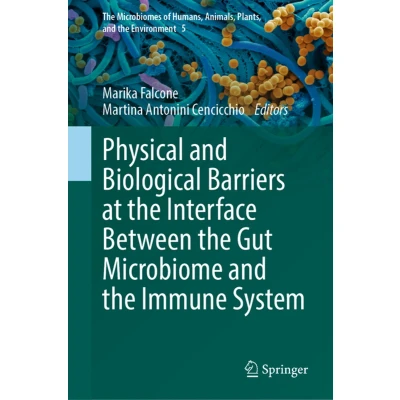
the Microbiomes of Humans, Animals, Plants, and Environment Physical Biological Barriers at Interface Between Gut Microbiome Immune System
Uitgelicht

|
175,00 |
Naar shop
|
| VERGELIJK ALLE AANBIEDERS (1) | ||
 Beschrijving
Bol
The gut environment is fundamental to the modulation of innate and adaptive immunity, not only in the intestinal mucosa, but systemically. The gut environment is fundamental to the modulation of innate and adaptive immunity, not only in the intestinal mucosa, but systemically. Immune cells constantly circulate through the intestinal tissue and gut-associated lymphoid tissue (GALT), where their phenotype and function are regulated by several factors, including but not limited to the commensal gut microbiota. The host-microbiome interaction, and the role of the gut microbiota in modulating innate and adaptive immunity in the intestinal mucosa and systemically, has been amply described in recent literature and reviews. This contributed volume instead explores the cutting-edge concept that gut microbiota composition is only one of the actors in intestinal immune regulation, and that several other factors -- both genetic and environmental -- modulate innate and adaptive immunity within the intestine. Each chapter in this volume addresses the various intestinal factors modulating immunity, including food components, endogenous metabolites, biological gut barrier components, and enteric neuroimmune circuits, individually and within the context of their integration with systemic components affecting immune cell phenotypes and function. In addition, it will more broadly address the role of the physical and biological barriers as key players in the interaction between immune cells and the intestinal environment, including coverage of cutting-edge in vivo technologies that have allowed the characterization of these interactions. The final chapters are dedicated to understanding how gut environment modifications are involved, and can be therapeutically manipulated in different diseases settings, including targeting the gut environment to regular response in anti-tumor immunity, fighting infections, and controlling autoimmune diseases. The gut environment is fundamental to the modulation of innate and adaptive immunity, not only in the intestinal mucosa, but systemically. Immune cells constantly circulate through the intestinal tissue and gut-associated lymphoid tissue (GALT), where their phenotype and function are regulated by several factors, including but not limited to the commensal gut microbiota. The host-microbiome interaction, and the role of the gut microbiota in modulating innate and adaptive immunity in the intestinal mucosa and systemically, has been amply described in recent literature and reviews. This contributed volume instead explores the cutting-edge concept that gut microbiota composition is only one of the actors in intestinal immune regulation, and that several other factors -- both genetic and environmental -- modulate innate and adaptive immunity within the intestine. Each chapter in this volume addresses the various intestinal factors modulating immunity, including food components, endogenous metabolites, biological gut barrier components, and enteric neuroimmune circuits, individually and within the context of their integration with systemic components affecting immune cell phenotypes and function. In addition, it will more broadly address the role of the physical and biological barriers as key players in the interaction between immune cells and the intestinal environment, including coverage of cutting-edge in vivo technologies that have allowed the characterization of these interactions. The final chapters are dedicated to understanding how gut environment modifications are involved, and can be therapeutically manipulated in different diseases settings, including targeting the gut environment to regular response in anti-tumor immunity, fighting infections, and controlling autoimmune diseases.


Vergelijk aanbieders (1)

 Beschrijving
(1)
Beschrijving
(1)
The gut environment is fundamental to the modulation of innate and adaptive immunity, not only in the intestinal mucosa, but systemically. The gut environment is fundamental to the modulation of innate and adaptive immunity, not only in the intestinal mucosa, but systemically. Immune cells constantly circulate through the intestinal tissue and gut-associated lymphoid tissue (GALT), where their phenotype and function are regulated by several factors, including but not limited to the commensal gut microbiota. The host-microbiome interaction, and the role of the gut microbiota in modulating innate and adaptive immunity in the intestinal mucosa and systemically, has been amply described in recent literature and reviews. This contributed volume instead explores the cutting-edge concept that gut microbiota composition is only one of the actors in intestinal immune regulation, and that several other factors -- both genetic and environmental -- modulate innate and adaptive immunity within the intestine. Each chapter in this volume addresses the various intestinal factors modulating immunity, including food components, endogenous metabolites, biological gut barrier components, and enteric neuroimmune circuits, individually and within the context of their integration with systemic components affecting immune cell phenotypes and function. In addition, it will more broadly address the role of the physical and biological barriers as key players in the interaction between immune cells and the intestinal environment, including coverage of cutting-edge in vivo technologies that have allowed the characterization of these interactions. The final chapters are dedicated to understanding how gut environment modifications are involved, and can be therapeutically manipulated in different diseases settings, including targeting the gut environment to regular response in anti-tumor immunity, fighting infections, and controlling autoimmune diseases. The gut environment is fundamental to the modulation of innate and adaptive immunity, not only in the intestinal mucosa, but systemically. Immune cells constantly circulate through the intestinal tissue and gut-associated lymphoid tissue (GALT), where their phenotype and function are regulated by several factors, including but not limited to the commensal gut microbiota. The host-microbiome interaction, and the role of the gut microbiota in modulating innate and adaptive immunity in the intestinal mucosa and systemically, has been amply described in recent literature and reviews. This contributed volume instead explores the cutting-edge concept that gut microbiota composition is only one of the actors in intestinal immune regulation, and that several other factors -- both genetic and environmental -- modulate innate and adaptive immunity within the intestine. Each chapter in this volume addresses the various intestinal factors modulating immunity, including food components, endogenous metabolites, biological gut barrier components, and enteric neuroimmune circuits, individually and within the context of their integration with systemic components affecting immune cell phenotypes and function. In addition, it will more broadly address the role of the physical and biological barriers as key players in the interaction between immune cells and the intestinal environment, including coverage of cutting-edge in vivo technologies that have allowed the characterization of these interactions. The final chapters are dedicated to understanding how gut environment modifications are involved, and can be therapeutically manipulated in different diseases settings, including targeting the gut environment to regular response in anti-tumor immunity, fighting infections, and controlling autoimmune diseases.
 Productspecificaties
| EAN |
|
|---|---|
| Maat |
|
 Prijshistorie
Prijzen voor het laatst bijgewerkt op:
 Gerelateerde resultaten


