
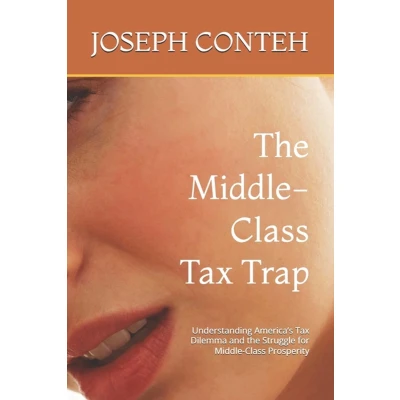
the Middle-Class Tax Trap: Understanding America’s Dilemma and Struggle for Prosperity
Uitgelicht

|
23,06 |
Naar shop
|

|
23,06 |
Naar shop
|

|
24,99
23,50 |
Naar shop
|
| VERGELIJK ALLE AANBIEDERS (3) | ||
 Beschrijving
Bol
The U.S. tax system plays a crucial role in the economic lives of millions, especially among the working middle class, who provide a significant portion of the nation's labor productivity and tax revenue. Despite the nation's high educational standards, developed institutions, and democratic governance, many taxpayers experience significant confusion about how the tax system functions, particularly during the annual "filing a tax return" period. The term "tax return" suggests a repayment of previously paid taxes; however, many taxpayers find that they owe more during the filing process than what was withheld from their paychecks throughout the year. This notable inconsistency raises fundamental concerns about the design, communication, and perceived equity of the American tax system. >The challenge is not merely a matter of wording but relates to the structural aspects of the system. The annual filing process is officially known as a tax return-an official report submitted to the IRS that conveys income information, deductions, credits, and taxes owed. In this context, "return" refers to the provision of financial details to the tax authorities rather than the refund of funds to the taxpayer. However, this difference is seldom clearly communicated to the public, leading to widespread misunderstandings about tax calculations and the reasons behind potential additional liabilities. This confusion is further complicated by the U.S. tax code's remarkable intricacy, which includes various taxation levels-federal income taxes, payroll taxes, state income taxes, property taxes, sales taxes, and multiple indirect taxes affecting households' purchasing power. For middle-class families, this cumulative effect can lead to the perception of being taxed multiple times on the same income. While economists categorize these taxes based on different services they fund, taxpayers often view them collectively as a heavy financial burden that limits their ability to save and build wealth over time. The implications of this structural complexity extend beyond individual stress. Tax systems can influence work incentives, entrepreneurial behaviors, investment choices, and perceptions of economic fairness. When citizens find the system perplexing or unjust, their trust in public institutions may wane. On the other hand, transparent and thoughtfully designed tax policies can facilitate economic engagement, enhance social mobility, and bolster democratic integrity.


 Beschrijving
(1)
Beschrijving
(1)
The U.S. tax system plays a crucial role in the economic lives of millions, especially among the working middle class, who provide a significant portion of the nation's labor productivity and tax revenue. Despite the nation's high educational standards, developed institutions, and democratic governance, many taxpayers experience significant confusion about how the tax system functions, particularly during the annual "filing a tax return" period. The term "tax return" suggests a repayment of previously paid taxes; however, many taxpayers find that they owe more during the filing process than what was withheld from their paychecks throughout the year. This notable inconsistency raises fundamental concerns about the design, communication, and perceived equity of the American tax system. >The challenge is not merely a matter of wording but relates to the structural aspects of the system. The annual filing process is officially known as a tax return-an official report submitted to the IRS that conveys income information, deductions, credits, and taxes owed. In this context, "return" refers to the provision of financial details to the tax authorities rather than the refund of funds to the taxpayer. However, this difference is seldom clearly communicated to the public, leading to widespread misunderstandings about tax calculations and the reasons behind potential additional liabilities. This confusion is further complicated by the U.S. tax code's remarkable intricacy, which includes various taxation levels-federal income taxes, payroll taxes, state income taxes, property taxes, sales taxes, and multiple indirect taxes affecting households' purchasing power. For middle-class families, this cumulative effect can lead to the perception of being taxed multiple times on the same income. While economists categorize these taxes based on different services they fund, taxpayers often view them collectively as a heavy financial burden that limits their ability to save and build wealth over time. The implications of this structural complexity extend beyond individual stress. Tax systems can influence work incentives, entrepreneurial behaviors, investment choices, and perceptions of economic fairness. When citizens find the system perplexing or unjust, their trust in public institutions may wane. On the other hand, transparent and thoughtfully designed tax policies can facilitate economic engagement, enhance social mobility, and bolster democratic integrity.
 Productspecificaties
 Prijshistorie
* Prijshistorie bevat geen data van Amazon, Amazon Marketplace.
Prijzen voor het laatst bijgewerkt op:
 Gerelateerde resultaten


