


€ 100,90 Gratis verzending

Gesponsorde links
|
|
100,90 |
Naar shop
|

|
152,59 |
Naar shop
|
| VERGELIJK ALLE AANBIEDERS (2) | ||
 Beschrijving
Vergelijk aanbieders (2)
Gesponsorde links · Sommige shops betalen ons een vergoeding
€ 100,90 Gratis verzending
€ 152,59 € 6,69 verzendkosten Totaal € 159,28
Winkels met andere maten
Beschrijving
(1)
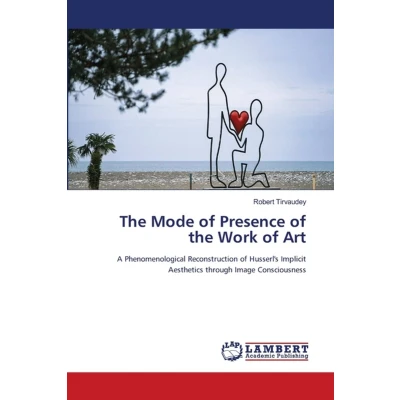
This study reconstructs Husserl's implicit aesthetics through a systematic analysis of image consciousness (Bildbewusstsein) in order to answer a central phenomenological question: if the artwork is neither a simply perceived object nor a purely imaginary fiction, what mode of presence does it inaugurate in consciousness? Drawing primarily on Phantasy, Image Consciousness, and Memory, together with Ideas I, Logical Investigations, and Cartesian Meditations, the study argues that the artwork is constituted through a distinctive mode of givenness irreducible to perception, imagination, or representation alone. Husserl's theory of the Bildding, Bildobjekt, and Bildsujet provides the conceptual framework for understanding aesthetic experience as a paradoxical presence in which absence becomes a condition of manifestation. The essay further examines the developments of this insight in Ingarden, Heidegger, and Merleau-Ponty, while demonstrating the originality of Husserl's position. It concludes that the artwork is best understood as a phenomenological event of presence that discloses a unique horizon of meaning and renews the philosophical understanding of aesthetic experience.
 Prijshistorie
* Prijshistorie bevat geen data van Amazon.
Prijzen voor het laatst bijgewerkt op:
 Gerelateerde resultaten
 Productspecificaties


