


€ 23,13 € 2,99 verzendkosten Totaal € 26,12

Gesponsorde links
|
|
23,13 |
Naar shop
|

|
23,86 |
Naar shop
|

|
23,86 |
Naar shop
|
| VERGELIJK ALLE AANBIEDERS (3) | ||
 Beschrijving
Vergelijk aanbieders (3)
Gesponsorde links · Sommige shops betalen ons een vergoeding
€ 23,13 € 2,99 verzendkosten Totaal € 26,12
€ 23,86 Gratis verzending
€ 23,86 Gratis verzending
Winkels met andere maten
Beschrijving
(1)
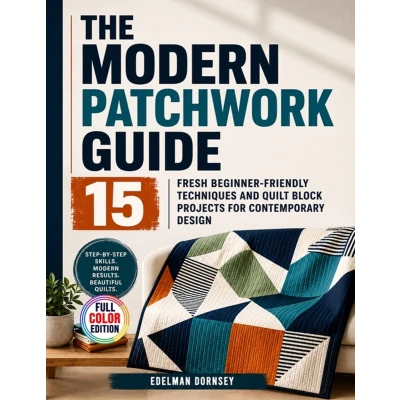
Fifteen chapters. Seven foundational techniques first, then eight projects that each travel from a bare cutting mat to a bound, finished piece. No prior sewing or quilting is assumed anywhere in the book, and a machine that sews a straight stitch is the only equipment you need on the first day. The order is built on purpose. You square one genuinely true edge, sew a scant quarter inch you have actually measured and confirmed, and learn to press seams so they nest before a single block is assembled. Each project chapter then names the exact earlier chapter its construction leans on, so a skill is never asked of you before it has been taught. That is what keeps a beginner moving with confidence instead of guessing at the steps hidden inside a finished photograph. Bare Cutting Mat to Sampler Lap Quilt - Rotary cutting and squaring fabric to true grain, the single quiet skill every block in the later chapters depends on- A scant quarter inch seam you confirm with a test unit, plus chain piecing that keeps a whole stack of pieces consistent- Half square and quarter square triangles built two at a time, then strip sets and gentle curves sewn without stretched edges- A Modern Nine Patch and a Half Square Triangle Pinwheel, each pieced, quilted, and bound into a small finished piece in one sitting- A Flying Geese table runner, a Churn Dash pillow, a Modern Log Cabin block, and a Simple Curves cushion to follow in turn- Basting, straight line quilting, and machine binding finished by hand, taught once in the finishing chapter and reused on every project- A Sampler Lap Quilt at the close that gathers the earlier blocks into one contemporary top with room to breathe > Why These Blocks Lie Genuinely Flat - Press the top and bottom rows one direction and the middle row the other, so seam allowances nest rather than stack into a lump- Test a scant quarter inch by sewing two strips and checking the joined unit measures exactly two and a half inches across- Match and pin every seam intersection, then square each finished block to a true twelve and a half inches on all four sides- Read a plain diagnosis for a trapezoid, a stair step, or an off center square, each traced back to one specific cause and fix- Handle bias edges flat and unstretched so a pinwheel center meets cleanly with no ripple around the point >Chapter one begins at the cutting mat, squaring one clean edge before anything else. Start there, and your first finished block is only a few evenings away.
 Prijshistorie
* Prijshistorie bevat geen data van Amazon, Amazon Marketplace.
Prijzen voor het laatst bijgewerkt op:
 Gerelateerde resultaten
 Productspecificaties


