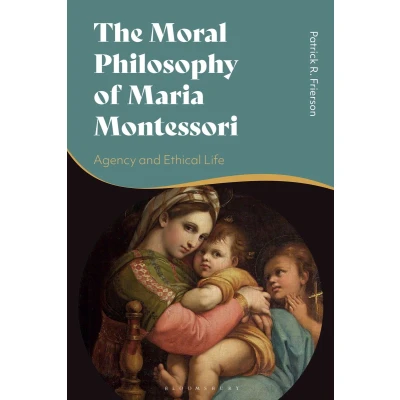

The Moral Philosophy of Maria Montessori: Agency and Ethical Life

Prijzen vanaf
27,99

Uitgelicht

VERGELIJK ALLE AANBIEDERS (2)

Beschrijving

Bol Partner Places the moral philosophy of Maria Montessori, one of the most influential educationalists of the 20th century, in the context of the history of philosophy in order to develop a new account of human agency. In the first scholarly exposition of Maria Montessori’s moral philosophy, Patrick R. Frierson presents an empirically-grounded ethics that takes its start from our tendency to strive for excellence and emphasizes mutual respect, social solidarity, and love. Laying out a compelling, Montessorian approach to ethical life, Frierson constructs an account of human agency based on children, who when attentively at work on self-chosen tasks, have agency worthy of respect. Through this interpretation of children’s agency, he introduces the core concept of Montessorian “character”: in Montessori’s ethics, character provides the ultimate value worthy of direct respect, and those with character have a natural tendency to respect others. Character is enhanced through corporate forms of agency that Montessori calls “social solidarity.” Weaving this educationalist’s ethics with theory from Nietzsche, Aristotle, Kant, Hegel, and Marx, Frierson places Montessori in the context of the history of philosophy. His study effectively unites philosophy and education, showing how human ethical life can be enhanced through a moral theory based on the respectful attention to the lived agency of young children.

Vergelijk aanbieders (2)

Shop
Prijs
Verzendkosten
Totale prijs
27,99
Gratis
27,99
Naar shop
Gratis Shipping Costs
29,70
gebruikt
Gratis
29,70
Naar shop
Gratis Shipping Costs
Beschrijving (2)
Bol Partner

Places the moral philosophy of Maria Montessori, one of the most influential educationalists of the 20th century, in the context of the history of philosophy in order to develop a new account of human agency. In the first scholarly exposition of Maria Montessori’s moral philosophy, Patrick R. Frierson presents an empirically-grounded ethics that takes its start from our tendency to strive for excellence and emphasizes mutual respect, social solidarity, and love. Laying out a compelling, Montessorian approach to ethical life, Frierson constructs an account of human agency based on children, who when attentively at work on self-chosen tasks, have agency worthy of respect. Through this interpretation of children’s agency, he introduces the core concept of Montessorian “character”: in Montessori’s ethics, character provides the ultimate value worthy of direct respect, and those with character have a natural tendency to respect others. Character is enhanced through corporate forms of agency that Montessori calls “social solidarity.” Weaving this educationalist’s ethics with theory from Nietzsche, Aristotle, Kant, Hegel, and Marx, Frierson places Montessori in the context of the history of philosophy. His study effectively unites philosophy and education, showing how human ethical life can be enhanced through a moral theory based on the respectful attention to the lived agency of young children.

Bol

In the first scholarly exposition of Maria Montessori's moral philosophy, Patrick R. Frierson presents an empirically-grounded ethics that takes its start from our tendency to strive for excellence and emphasizes mutual respect, social solidarity, and love. Laying out a compelling, Montessorian approach to ethical life, Frierson constructs an account of human agency based on children, who when attentively at work on self-chosen tasks, have agency worthy of respect. Through this interpretation of children's agency, he introduces the core concept of Montessorian “character”: in Montessori's ethics, character provides the ultimate value worthy of direct respect, and those with character have a natural tendency to respect others. Character is enhanced through corporate forms of agency that Montessori calls “social solidarity.” Weaving this educationalist's ethics with theory from Nietzsche, Aristotle, Kant, Hegel, and Marx, Frierson places Montessori in the context of the history of philosophy. His study effectively unites philosophy and education, showing how human ethical life can be enhanced through a moral theory based on the respectful attention to the lived agency of young children.


Productspecificaties

EAN
  • 9781350176393
  • 9781350345805
Maat


Prijshistorie

Prijzen voor het laatst bijgewerkt op:

Uitgelichte Keuze
27,99
Naar shop
