

€ 11,96 Gratis verzending

Uitgelicht
|
|
11,96 |
Naar shop
|

|
11,96 |
Naar shop
|

|
12,50 |
Naar shop
|
| VERGELIJK ALLE AANBIEDERS (3) | ||
 Beschrijving
Vergelijk aanbieders (3)
€ 11,96 Gratis verzending
€ 11,96 Gratis verzending
€ 12,50 € 2,99 verzendkosten Totaal € 15,49
Winkels met andere maten
Beschrijving
(1)
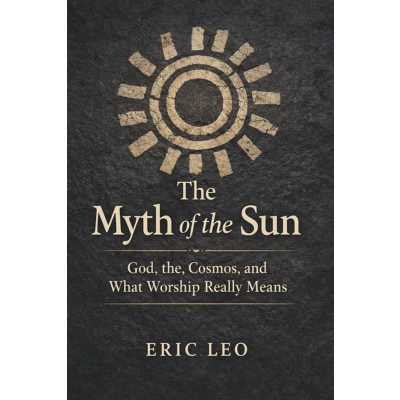
For thousands of years, humanity looked to the heavens and saw gods.The Sun gave life. The planets governed time. The stars inspired stories that would become the foundation of religion, mythology, and civilization itself. Modern science eventually replaced these explanations with astronomy, physics, and evolution, and in doing so convinced many people that the ancient world had simply been wrong.But what if the story is more complicated than that?In The Myth of the Sun, philosopher, sociologist, and author Eric Leo explores a provocative idea: that mythology was never primitive superstition, but humanity's first attempt to understand the systems that govern existence. The gods of antiquity were not imaginary beings so much as early models of real forces, translated into stories long before science had the tools to describe them.Drawing from history, mythology, astronomy, philosophy, and his own exploration of consciousness in 108: The Story of Discovering Earth's Consciousness and Cosmic Love, Leo traces a path from the first solar religions to the modern scientific worldview. Along the way, he argues that science did not so much disprove the gods as rename them.Inside you'll discover: - Why ancient civilizations worshipped the Sun and why that decision may have been more rational than modern people assume- The hidden connections between solar mythology, planetary symbolism, and the world's major religions- How myths functioned as early systems theory and a way of understanding complex natural processes- Why the death of God fragmented meaning rather than eliminating it- The relationship between astronomy, religion, and humanity's search for purpose- The Gaia hypothesis, planetary consciousness, and the possibility that Earth itself may be more than an inert rock in space- Sentientism, a philosophy that seeks to reconcile science, spirituality, ethics, and environmental responsibility- Why climate change may be as much a spiritual crisis as an environmental one- What worship means when viewed through the lens of systems, consciousness, and interdependenceNeither a traditional religious book nor an attack on religion, The Myth of the Sun occupies a space between science and spirituality, skepticism and wonder. It asks readers to reconsider some of humanity's oldest questions through a modern lens: What is a god?What does it mean to worship?And what if the forces our ancestors revered never disappeared at all?For readers of Carl Sagan, Joseph Campbell, James Lovelock, comparative mythology, philosophy of religion, consciousness studies, and big questions about humanity's place in the cosmos, The Myth of the Sun offers a bold and thought-provoking exploration of meaning in the modern age.
 Prijshistorie
 * Prijshistorie bevat geen data van Amazon, Amazon Marketplace.
Prijzen voor het laatst bijgewerkt op:
 Gerelateerde resultaten
 Productspecificaties


