
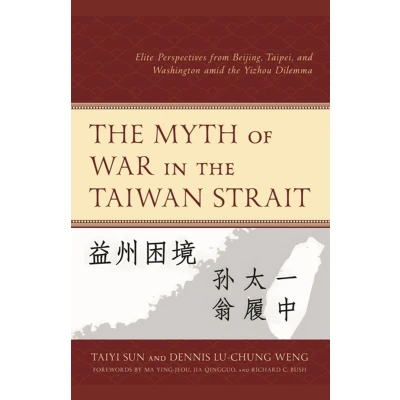
the Myth of War in Taiwan Strait
Uitgelicht

|
92,40 |
Naar shop
|
| VERGELIJK ALLE AANBIEDERS (1) | ||
 Beschrijving
Bol
War in the Taiwan Strait is neither imminent nor probable. However, Beijing, Taipei, and Washington each face the “Yizhou Dilemma” that neither action nor inaction would lead to desirable outcomes. The Myth of War in the Taiwan Strait: Elite Perspectives from Beijing, Taipei, and Washington amid the Yizhou Dilemma proposes a new framework of the “Yizhou dilemma” to capture the conundrum faced by a hegemony (the U.S.), a rising power (Mainland China), and the weaker third entity (Taiwan) crucial to the rising power’s ascendance. Taiyi Sun and Dennis Lu-Cheng Weng, drawing evidence from the assessments and perceptions of directly involved elites from Beijing, Taipei, and Washington, argue war is not imminent, yet action or inaction by each party could potentially lead to detrimental outcomes. For the rising power, overexpansion incurs significant costs, but restraint makes it unable to attain “major power status.” Consequently, low-cost symbolic shows of force are more likely than a full invasion of the third entity. For the strategically vital yet relatively weaker entity, asserting autonomy and independence to put up a fight would risk escalating tension and trigger aggressive behaviors from the rising power. Yet, maintaining the status quo would allow the rising power to continue strengthening itself so that a coerced unification unfavorable to the weaker entity could become more probable. For the hegemony, leaving more looming challenges elsewhere unresolved could diminish the power of the hegemony, but getting involved leads to even more challenges.


Vergelijk aanbieders (1)

 Beschrijving
(1)
Beschrijving
(1)
War in the Taiwan Strait is neither imminent nor probable. However, Beijing, Taipei, and Washington each face the “Yizhou Dilemma” that neither action nor inaction would lead to desirable outcomes. The Myth of War in the Taiwan Strait: Elite Perspectives from Beijing, Taipei, and Washington amid the Yizhou Dilemma proposes a new framework of the “Yizhou dilemma” to capture the conundrum faced by a hegemony (the U.S.), a rising power (Mainland China), and the weaker third entity (Taiwan) crucial to the rising power’s ascendance. Taiyi Sun and Dennis Lu-Cheng Weng, drawing evidence from the assessments and perceptions of directly involved elites from Beijing, Taipei, and Washington, argue war is not imminent, yet action or inaction by each party could potentially lead to detrimental outcomes. For the rising power, overexpansion incurs significant costs, but restraint makes it unable to attain “major power status.” Consequently, low-cost symbolic shows of force are more likely than a full invasion of the third entity. For the strategically vital yet relatively weaker entity, asserting autonomy and independence to put up a fight would risk escalating tension and trigger aggressive behaviors from the rising power. Yet, maintaining the status quo would allow the rising power to continue strengthening itself so that a coerced unification unfavorable to the weaker entity could become more probable. For the hegemony, leaving more looming challenges elsewhere unresolved could diminish the power of the hegemony, but getting involved leads to even more challenges.
 Productspecificaties
| EAN |
|
|---|---|
| Maat |
|
 Prijshistorie
Prijzen voor het laatst bijgewerkt op:
 Gerelateerde resultaten


