


€ 18,92 € 2,99 verzendkosten Totaal € 21,91

Uitgelicht
|
|
18,92 |
Naar shop
|

|
20,52 |
Naar shop
|

|
20,52 |
Naar shop
|
| VERGELIJK ALLE AANBIEDERS (3) | ||
 Beschrijving
Vergelijk aanbieders (3)
€ 18,92 € 2,99 verzendkosten Totaal € 21,91
€ 20,52 Gratis verzending
€ 20,52 Gratis verzending
Winkels met andere maten
Beschrijving
(1)
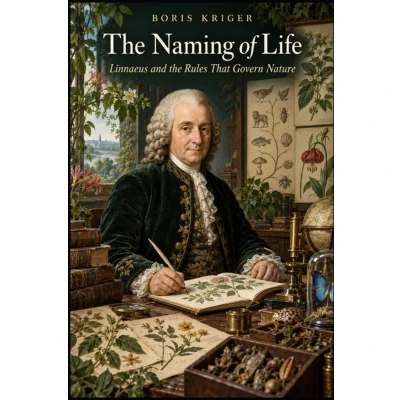
In 1753 a Swedish professor printed a single italic word in the margin beside each plant in his flora. He called these words trivial names, and he meant it. The science was the formal description beside them, eight words of Latin telling a competent reader exactly what the thing was. The descriptions are gone. The words in the margin are now the legal names of every organism on Earth. This is the story of that accident and of the machinery that grew around it. Carl Linnaeus sorted plants by counting their sexual organs, which offended a great many people and sold a great many books. He admitted in print that the system was artificial and would have to be replaced. It was, within fifty years. What survived was the part he thought was beneath notice. Along the way: a doctorate obtained in under a fortnight, a seven-headed hydra exposed in Hamburg at some risk to its owner's profits, seventeen students sent out to collect and seven who never came home, a man who reviewed his own books anonymously and favorably, and a small pink flower that ended up carrying his name and one letter of his metadata. It is also an argument. Biology is the only science governed by statute, with a zero point fixed at the first of May, 1753, before which nothing published exists. The names of living things are not discovered and not quite agreed. They are adjudicated, by codes with articles and amendments, by committees, and by congresses that take card votes - most recently in Madrid in 2024, where several hundred botanists reached back through two and a half centuries and deleted a word. Linnaeus believed species were fixed and drew a nested hierarchy to prove it. That hierarchy is the best evidence for evolution anyone has ever produced. He built the instrument that dismantled his own universe, handed it to the next century, and died convinced he had been reading the mind of God. Keywords: Linnaeus, taxonomy, binomial nomenclature, history of science, classification, natural history, botany
 Prijshistorie
 * Prijshistorie bevat geen data van Amazon, Amazon Marketplace.
Prijzen voor het laatst bijgewerkt op:
 Gerelateerde resultaten
 Productspecificaties


