
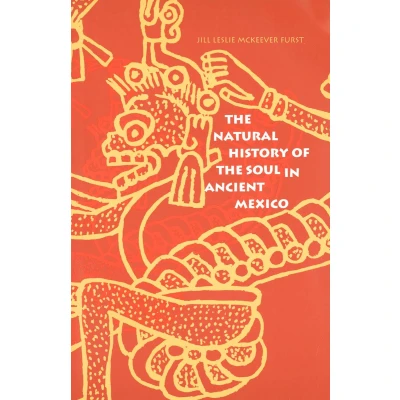
the Natural History of Soul in Ancient Mexico
Uitgelicht

|
17,99 |
Naar shop
|
| VERGELIJK ALLE AANBIEDERS (1) | ||
 Beschrijving
Bol Partner
This work explores basic pre-Columbian beliefs about the soul among ancient Mesoamerican peoples. It focuses on the Central Mexican Aztecs (the "Mexica"), who believed in multiple souls that gave humans their shared and individual characteristics and survived the body after death. This fascinating, richly illustrated book explores basic Precolumbian beliefs about the soul among ancient Mesoamerican peoples. It focuses on the Central Mexican Aztecs—called the Mexica—who believed in multiple souls that animated the body, gave humans their shared and individual characteristics, and survived the body after death. Drawing on a wide range of sources, including visual representations on Precolumbian monuments, colonial Spanish chronicles, early medical and travel accounts, and modern ethnography, Jill McKeever Furst argues that the Mexica turned not to mental or linguistic constructions for verifying ideas about the soul but to what they experienced through the senses. According to McKeever Furst, Mexica definitions and characterizations of the souls were influenced by their observations of human physiology—including birth, temperature changes in the body, normal aging, and the processes of death and dying—and by their experiences with their environment, specifically the lands near lakes that provided them with unusual visual and olfactory sensations (one of the souls is based on the odor of marshes). Providing as supporting evidence native beliefs about the soul in the ideologies of other Uto-Aztecan speakers ranging from the United States to Central America, McKeever Furst challenges deconstructionist theories that cultural phenomena are purely mental constructs.


Vergelijk aanbieders (1)

 Beschrijving
(1)
Beschrijving
(1)
This work explores basic pre-Columbian beliefs about the soul among ancient Mesoamerican peoples. It focuses on the Central Mexican Aztecs (the "Mexica"), who believed in multiple souls that gave humans their shared and individual characteristics and survived the body after death. This fascinating, richly illustrated book explores basic Precolumbian beliefs about the soul among ancient Mesoamerican peoples. It focuses on the Central Mexican Aztecs—called the Mexica—who believed in multiple souls that animated the body, gave humans their shared and individual characteristics, and survived the body after death. Drawing on a wide range of sources, including visual representations on Precolumbian monuments, colonial Spanish chronicles, early medical and travel accounts, and modern ethnography, Jill McKeever Furst argues that the Mexica turned not to mental or linguistic constructions for verifying ideas about the soul but to what they experienced through the senses. According to McKeever Furst, Mexica definitions and characterizations of the souls were influenced by their observations of human physiology—including birth, temperature changes in the body, normal aging, and the processes of death and dying—and by their experiences with their environment, specifically the lands near lakes that provided them with unusual visual and olfactory sensations (one of the souls is based on the odor of marshes). Providing as supporting evidence native beliefs about the soul in the ideologies of other Uto-Aztecan speakers ranging from the United States to Central America, McKeever Furst challenges deconstructionist theories that cultural phenomena are purely mental constructs.
 Productspecificaties
| EAN |
|
|---|---|
| Maat |
|
 Prijshistorie
Prijzen voor het laatst bijgewerkt op:
 Gerelateerde resultaten


