


€ 39,56 Gratis verzending

Uitgelicht
|
|
39,56 |
Naar shop
|

|
76,96 |
Naar shop
|
| VERGELIJK ALLE AANBIEDERS (2) | ||
 Beschrijving
Vergelijk aanbieders (2)
€ 39,56 Gratis verzending
gebruikt € 76,96 Gratis verzending
Winkels met andere maten
Beschrijving
(2)
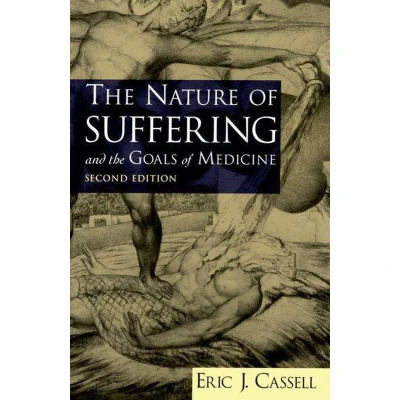
This is a revised and expanded edtion of a classic in palliative medicine, originally published in 1991. With three added chapters and a new preface summarizing our progress in the area of pain management, this is a must-hve for those in palliative medicine and hospice care. The obligation of physicians to relieve human suffering stretches back into antiquity. But what exactly, is suffering? One patient with metastic cancer of the stomach, from which he knew he would shortly die, said he was not suffering. Another, someone who had been operated on for a mior problem--in little pain and not seemingly distressed--said that even coming into the hospital had been a source of pain and not suffering. With such varied responses to the problem of suffering, inevitable questions arise. Is it the doctor's responsibility to treat the disease or the patient? And what is the relationship between suffering and the goals of medicine? According to Dr. Eric Cassell, these are crucial questions, but unfortunately, have remained only queries void of adequate solutions. It is time for the sick person, Cassell believes, to be not merely an important concern for physicians but the central focus of medicine. With this in mind, Cassell argues for an understanding of what changes should be made in order to successfully treat the sick while alleviating suffering, and how to actually go about making these changes with the methods and training techniques firmly rooted in the doctor's relationship with the patient. Dr. Cassell offers an incisive critique of the approach of modern medicine. Drawing on a number of evocative patient narratives, he writes that the goal of medicine must be to treat an individual's suffering, and not just the disease. In addition, Cassell's thoughtful and incisive argument will appeal to psychologists and psychiatrists interested in the nature of pain and suffering.
Bol PartnerThe Nature of Suffering underscores the change that is taking place in medicine from a basic concern with disease to a greater focus on the sick person. Cassell centers his discussion on the problem of suffering because, he says, its recognition and relief are a test of the adequacy of any system of medicine. He describes what suffering is and its relationship to the sick person: bodies do not suffer, people do. An exclusive concern with scientific knowledge of the body and disease, therefore, impedes an understanding of suffering and diminishes the care of the suffering patient.The growing criticism that medicine is not sufficiently humanistic does not go deep enough to provide a basis for a new understanding of medicine. New concepts in medicine must have their basis in its history and in the development of ideas about disease and treatment. Cassell uses many stories about patients to demonstrate that, despite the current dominance of science and technology, there can be no diagnosis, search for the cause of the patient's disease, prognostication, or treatment without consideration of the individual sick person. Recent trends in medicine and society, Cassell believes, show that it is time for the sick person to be not merely an important concern for physicians but the central focus of medicine. He addresses the exciting problems involved in such a shift. In this new medicine, doctors would have to know the person as well as they know the disease. What are persons, however, and how are doctors to comprehend them? The kinds of knowledge involved are varied, including values and aesthetics as well as science. In the process of knowing the experience of patient and doctor move to center stage. He believes that the exploration of the person will engage medicine in the 21st century just as understanding the body has occupied the last hundred years.
 Productspecificaties
| EAN |
|
|---|---|
| Maat |
|
 Prijshistorie
Prijzen voor het laatst bijgewerkt op:
 Gerelateerde resultaten


