
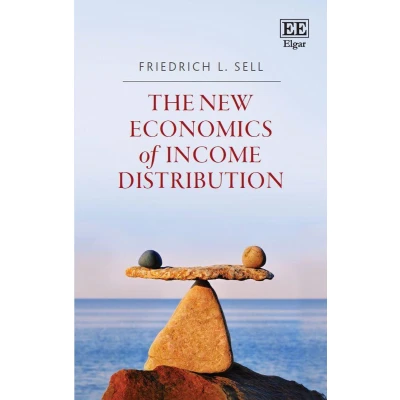
The New Economics of Income Distribution
Uitgelicht

|
27,99 |
Naar shop
|

|
29,59 |
Naar shop
|
| VERGELIJK ALLE AANBIEDERS (2) | ||
 Beschrijving
Bol Partner
With the increased interest in the role of inequality in modern economies, this timely and original book explores income distribution as an equilibrium phenomenon. With the increased interest in the role of inequality in modern economies, this timely and original book explores income distribution as an equilibrium phenomenon. Though globalization tends to destroy earlier equilibria within industrialized and developing countries, new equilibria are bound to emerge. The book aims at a better understanding of the forces that create these new equilibria in income distribution and examines the concept at three distinct levels: market equilibrium, bargaining equilibrium and political economy equilibrium. In particular, the author addresses the question of how the main factor markets of labour and capital are related to income distribution. Sell's theoretical and empirical analysis investigates global income quotas, the aggregate distribution of income between labour and capital, and between labour income earners and profit income earners. New models are used to explain the dynamics of income distribution during business cycles and as a companion to long-term economic growth. A main focus of the monograph is on the ways in which globalization affects income distribution via trade flows, capital flows and labor mobility. Throughout, income distribution is regarded as a result of the struggle between different social preferences such as inequity aversion and equity aversion. This erudite and extensive tome will be of value to all economists, scholars and students interested in economic growth and inequality.


 Beschrijving
(2)
Beschrijving
(2)
With the increased interest in the role of inequality in modern economies, this timely and original book explores income distribution as an equilibrium phenomenon. With the increased interest in the role of inequality in modern economies, this timely and original book explores income distribution as an equilibrium phenomenon. Though globalization tends to destroy earlier equilibria within industrialized and developing countries, new equilibria are bound to emerge. The book aims at a better understanding of the forces that create these new equilibria in income distribution and examines the concept at three distinct levels: market equilibrium, bargaining equilibrium and political economy equilibrium. In particular, the author addresses the question of how the main factor markets of labour and capital are related to income distribution. Sell's theoretical and empirical analysis investigates global income quotas, the aggregate distribution of income between labour and capital, and between labour income earners and profit income earners. New models are used to explain the dynamics of income distribution during business cycles and as a companion to long-term economic growth. A main focus of the monograph is on the ways in which globalization affects income distribution via trade flows, capital flows and labor mobility. Throughout, income distribution is regarded as a result of the struggle between different social preferences such as inequity aversion and equity aversion. This erudite and extensive tome will be of value to all economists, scholars and students interested in economic growth and inequality.
BolWith the increased interest in the role of inequality in modern economies, this timely and original book explores income distribution as an equilibrium phenomenon. Though globalization tends to destroy earlier equilibria within industrialized and developing countries, new equilibria are bound to emerge. The book aims at a better understanding of the forces that create these new equilibria in income distribution and examines the concept at three distinct levels: market equilibrium, bargaining equilibrium and political economy equilibrium. In particular, the author addresses the question of how the main factor markets of labour and capital are related to income distribution. Sell's theoretical and empirical analysis investigates global income quotas, the aggregate distribution of income between labour and capital, and between labour income earners and profit income earners. New models are used to explain the dynamics of income distribution during business cycles and as a companion to long-term economic growth. A main focus of the monograph is on the ways in which globalization affects income distribution via trade flows, capital flows and labor mobility. Throughout, income distribution is regarded as a result of the struggle between different social preferences such as inequity aversion and equity aversion. This erudite and extensive tome will be of value to all economists, scholars and students interested in economic growth and inequality.
 Productspecificaties
| EAN |
|
|---|---|
| Maat |
|
 Prijshistorie
Prijzen voor het laatst bijgewerkt op:
 Gerelateerde resultaten


