

€ 33,50 Gratis verzending

Uitgelicht
|
|
33,50 |
Naar shop
|

|
33,50 |
Naar shop
|

|
37,99 |
Naar shop
|
| VERGELIJK ALLE AANBIEDERS (3) | ||
 Beschrijving
Vergelijk aanbieders (3)
€ 33,50 Gratis verzending
€ 33,50 Gratis verzending
€ 37,99 Gratis verzending
Winkels met andere maten
Beschrijving
(1)
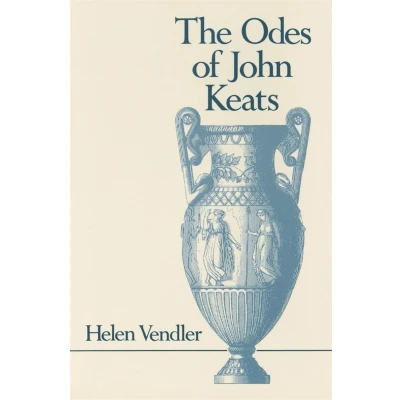
Vendler offers a new assessment of the six great odes of Keats and in the process gives us, implicitly, a reading of Keats’s whole career. She proposes that these poems are imperfectly seen unless seen together—that they form a sequence in which Keats pursued a strict and profound inquiry into questions of language, philosophy, and aesthetics. “Simply superb.”—NationA landmark study reconstructs the magnificent architecture of Keats’s odes beam by beam. With the exception of Shakespeare, John Keats has garnered more critical attention than probably any other English poet, above all for his six great odes. Composed in the span of just a few months in 1819, the odes mark the high point of Keats’s all-too-short literary career, forming, as Helen Vendler puts it, “the group of works in which the English language finds an ultimate embodiment.” Even with the mountain of criticism that precedes it, The Odes of John Keats nonetheless accomplishes something bracingly new: it reveals that the odes, typically read separately, demand to be read as a unified whole. Only when we read them together, Vendler argues, do we see how each ode builds upon, and contradicts, the one that came before it—a progression that expresses Keats’s sustained and deliberate inquiry into nature of creativity itself. From fruitless revery in “Ode on Indolence,” to successive explorations of music and mimetic art in “Ode to a Nightingale” and “Ode on a Grecian Urn,” to the final triumph of lyric poetry in “To Autumn,” each ode advances tentative theses about the relationship between truth, beauty, and sensory experience, only to subsequently overturn them from a higher vantage point. Exquisitely attentive to the warp and weft of Keats’s “many languages,” from Greek mythology to eighteenth-century allegory, Vendler’s architectonic reading masterfully achieves criticism’s highest aim: keeping these classic poems, to borrow Keats’s own words, “forever warm and still to be enjoy’d.”
 Prijshistorie
 * Prijshistorie bevat geen data van Amazon, Amazon Marketplace.
Prijzen voor het laatst bijgewerkt op:
 Gerelateerde resultaten
 Productspecificaties


