
the Ontology of Mother in Law
Uitgelicht

|
85,96 |
Naar shop
|

|
170,31 |
Naar shop
|
| VERGELIJK ALLE AANBIEDERS (2) | ||
 Beschrijving
Bol
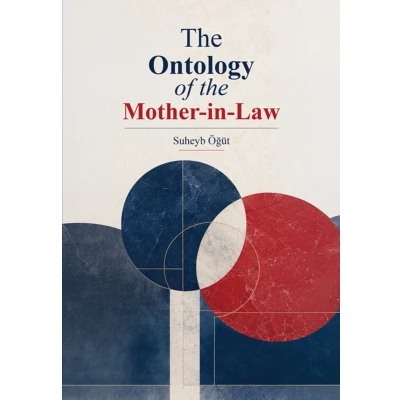
Challenging established binaries, the work recasts the mother-in-law as a key force that defies traditional roles and state norms. It uncovers a subtle, hybrid authority operating through implicit influence, interlacing debates on gender, law, and the deep intertwining of familial and political realms. The Ontology of the Mother-in-Law develops a political ontology of the “mother-in-law” as a neglected yet decisive figure of power beyond the classical opposition between father and mother, law and exception, state and civil society. While feminist critique traditionally identifies the father as the sole (evil) political Subject—law, sovereignty, universality—critical theory from Hegel to Lacan and Derrida reveals that this figure is internally barred by its feminine other. Drawing on Agamben and Lacan, Suheyb Ö?üt’s new book argues that this dialectic remains insufficient, since it overlooks a third position: the constitutive exception, where woman turns into law (father) itself. This trans figure corresponds not just to the “state of exception” but also the very deep state mechanism in which phallic and hegemonic powers are intertwined. The mother-in-law names this hybrid power that operates neither through direct coercion nor ideological hegemony, but through implicit intrusion and arbitrariness. Analyzing contemporary Turkish sociology (Kemalism, the headscarf debate, the deep state, leftwing politics, sexuality, gender and academic politics) and global sociology, The Ontology of the Mother-in-Law claims that understanding modern power requires grasping this cruel, trans-ontological position that permeates both family and politics.


 Beschrijving
(1)
Beschrijving
(1)
Challenging established binaries, the work recasts the mother-in-law as a key force that defies traditional roles and state norms. It uncovers a subtle, hybrid authority operating through implicit influence, interlacing debates on gender, law, and the deep intertwining of familial and political realms. The Ontology of the Mother-in-Law develops a political ontology of the “mother-in-law” as a neglected yet decisive figure of power beyond the classical opposition between father and mother, law and exception, state and civil society. While feminist critique traditionally identifies the father as the sole (evil) political Subject—law, sovereignty, universality—critical theory from Hegel to Lacan and Derrida reveals that this figure is internally barred by its feminine other. Drawing on Agamben and Lacan, Suheyb Ö?üt’s new book argues that this dialectic remains insufficient, since it overlooks a third position: the constitutive exception, where woman turns into law (father) itself. This trans figure corresponds not just to the “state of exception” but also the very deep state mechanism in which phallic and hegemonic powers are intertwined. The mother-in-law names this hybrid power that operates neither through direct coercion nor ideological hegemony, but through implicit intrusion and arbitrariness. Analyzing contemporary Turkish sociology (Kemalism, the headscarf debate, the deep state, leftwing politics, sexuality, gender and academic politics) and global sociology, The Ontology of the Mother-in-Law claims that understanding modern power requires grasping this cruel, trans-ontological position that permeates both family and politics.
 Productspecificaties
 Prijshistorie
* Prijshistorie bevat geen data van Amazon.
Prijzen voor het laatst bijgewerkt op:
 Gerelateerde resultaten


