

€ 29,49 Gratis verzending

Uitgelicht
|
|
29,49 |
Naar shop
|

|
29,49 |
Naar shop
|

|
29,99 |
Naar shop
|
| VERGELIJK ALLE AANBIEDERS (3) | ||
 Beschrijving
Vergelijk aanbieders (3)
€ 29,49 Gratis verzending
€ 29,49 Gratis verzending
€ 29,99 Gratis verzending
Winkels met andere maten
Beschrijving
(1)
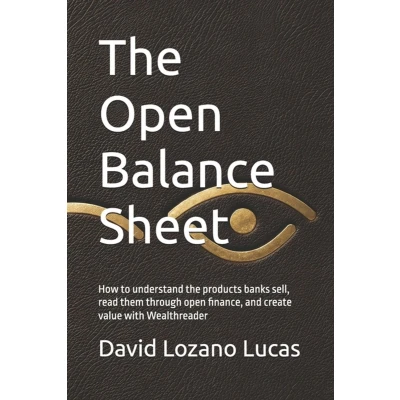
Open banking opened the account. Open finance opens the balance sheet. A bank does not sell isolated products. It structures economic relationships around money and time. Accounts, cards, loans, deposits, investments, property, invoices, guarantees and documents belong to the same financial system. Understanding that system requires looking beyond individual products and learning to read the complete financial balance sheet. The Open Balance Sheet explains, with clarity and rigour, the need addressed by each financial product, how those products become data, and what becomes possible when open finance connects assets, liabilities, income, expenditure, events and documents. Drawing on their experience across financial technology, regulation, product development and commercial strategy, David Lozano, Cristina Muñoz and Manuel Gnecco explore: - the evolution from open banking to open finance and open wealth; - the main banking, credit and wealth-management products; - taxation as an essential part of financial decision-making; - use cases in lending, wealth management, treasury, insurance, fraud prevention and artificial intelligence; - the different regulatory models emerging around the world; - the ethical limits of consent, scoring, explainability and conflicts of interest; >This book is written for professionals working in banking, fintech, investment, risk, product, technology, regulation and wealth management. It proposes a broader and more useful way to understand the financial relationship between institutions and their customers. Access to more data is not enough. What matters is understanding those data with context, purpose and responsibility. Read better to serve better.
 Prijshistorie
 * Prijshistorie bevat geen data van Amazon, Amazon Marketplace.
Prijzen voor het laatst bijgewerkt op:
 Gerelateerde resultaten
 Productspecificaties


