

€ 59,99 Gratis verzending

Gesponsorde links
|
|
59,99 |
Naar shop
|

|
60,99 |
Naar shop
|

|
138,99 |
Naar shop
|
| VERGELIJK ALLE AANBIEDERS (3) | ||
 Beschrijving
Vergelijk aanbieders (3)
Gesponsorde links · Sommige shops betalen ons een vergoeding
€ 59,99 Gratis verzending
€ 60,99 Gratis verzending
€ 138,99 Gratis verzending
Winkels met andere maten
Beschrijving
(1)
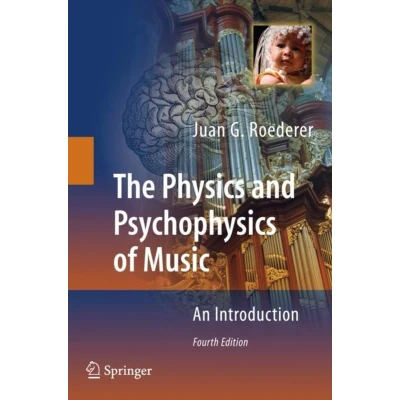
This book uses acoustics, psychophysics, and neurobiology to explore the physical systems and biological processes that intervene when we hear music. It incorporates the latest findings in brain science and tone generation in musical instruments. This book, a classic in its field, deals with the physical systems and physiological processes that intervene in music. It analyzes what objective, physical properties of sound are associated with what subjective psychological sensations of music, and it describes how these sound patterns are actually generated in musical instruments, how they propagate through the environment, and how they are detected by the ear and interpreted in the brain. Using the precise language of science, but without complicated mathematics, the author weaves a close mesh of the physics, psychophysics and neurobiology relevant to music. A prior knowledge of physics, mathematics, neurobiology or psychology is not required to understand most of the book; it is, however, assumed that the reader is familiar with music - in particular, with musical notation, musical scales and intervals, and some of the basics of musical instruments. This new edition presents substantially updated coverage of psychoacoustics, including: • New results from tomographic imaging of brain function that confirm some speculations in previous editions • New research on consciousness and emotions • The possibility of musics in extraterrestrial civilizations This introductory text deals with the physical systems and biological processes that intervene in what we broadly call "music. " We shall analyze what obj- tive, physical properties of sound patterns are associated with what subjective, psychological sensations of music. We shall describe how these sound patterns are actually produced in musical instruments, how they propagate through the environment, and how they are detected by the ear and interpreted in the brain. We shall do all this by using the physicist's language and his method of thought and analysis-without, however, using complicated mathematics. Although no previous knowledge of physics, physiology, and neurobiology is required, it is assumedthatthereaderpossesseshigh-schooleducationandisfamiliarwithbasic aspects of music, in particular with musical notation, scales and intervals, musical instruments and typical musical "sensations. " Books are readily available on the fundamentals of physics of music (e. g. , Benade, 1990; Pierce, 1983; Fletcher and Rossing, 1998; Johnston, 2003) and psychoacoustics, music psychology and perception (e. g. , Plomp, 1976; Deutsch, 1982a; Zatorre and Peretz, 2001; Hartmann, 2005). An excellent text on musical acoustics is that of Sundberg (1991), still most useful 17 years later; comp- hensive discussions of recent researches on pitch perception and related au- tory mechanisms can be found in Plack et al. (2005). The purpose of the present volume is not to duplicate but to synthesize and complement existing literature.
 Prijshistorie
* Prijshistorie bevat geen data van Amazon.
Prijzen voor het laatst bijgewerkt op:
 Gerelateerde resultaten
 Productspecificaties


