
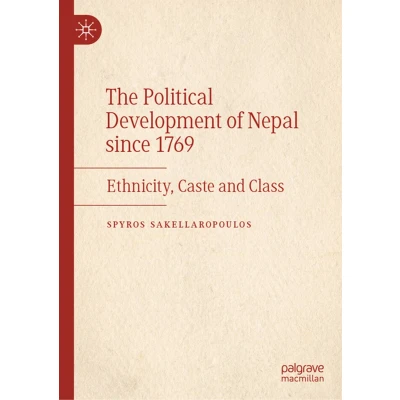
The Political Development of Nepal Since 1769: Ethnicity, Caste and Class
Uitgelicht

|
136,99
135,00 |
Naar shop
|
| VERGELIJK ALLE AANBIEDERS (1) | ||
 Beschrijving
Bol
This book offers a comprehensive analysis of Nepal’s political and social transformations from the formation of the state in 1769 to the abolition of the monarchy and the subsequent developments of the twenty-first century. This book offers a comprehensive analysis of Nepal’s political and social transformations from the formation of the state in 1769 to the abolition of the monarchy and the subsequent developments of the twenty-first century. Drawing on a Marxist methodological framework, it situates Nepal’s historical trajectory within the interplay of state power, class relations and social hierarchies. The study explores the enduring influence of Hinduism on Nepalese society, the dynamics of caste and ethnicity and the patriarchal structures that have shaped social relations. It also examines the evolution of the Nepalese communist movement and its capacity to articulate the contradictions of a society marked by ethnicism, caste stratification and regional inequalities. By integrating political history with economic and sociological analysis, the book illuminates the structural crises that culminated in the collapse of the monarchy and the emergence of a new political order. Ideal for scholars and students of South Asian studies, political sociology and postcolonial history, this work provides an interdisciplinary perspective on Nepal’s complex social formation and its position within the broader geopolitics of the Indian subcontinent.


Vergelijk aanbieders (1)

 Beschrijving
(1)
Beschrijving
(1)
This book offers a comprehensive analysis of Nepal’s political and social transformations from the formation of the state in 1769 to the abolition of the monarchy and the subsequent developments of the twenty-first century. This book offers a comprehensive analysis of Nepal’s political and social transformations from the formation of the state in 1769 to the abolition of the monarchy and the subsequent developments of the twenty-first century. Drawing on a Marxist methodological framework, it situates Nepal’s historical trajectory within the interplay of state power, class relations and social hierarchies. The study explores the enduring influence of Hinduism on Nepalese society, the dynamics of caste and ethnicity and the patriarchal structures that have shaped social relations. It also examines the evolution of the Nepalese communist movement and its capacity to articulate the contradictions of a society marked by ethnicism, caste stratification and regional inequalities. By integrating political history with economic and sociological analysis, the book illuminates the structural crises that culminated in the collapse of the monarchy and the emergence of a new political order. Ideal for scholars and students of South Asian studies, political sociology and postcolonial history, this work provides an interdisciplinary perspective on Nepal’s complex social formation and its position within the broader geopolitics of the Indian subcontinent.
 Productspecificaties
| EAN |
|
|---|---|
| Maat |
|
 Prijshistorie
Prijzen voor het laatst bijgewerkt op:
 Gerelateerde resultaten


