
the Politics of Faith and Scepticism
Uitgelicht

|
12,04 |
Naar shop
|

|
16,00 |
Naar shop
|

|
16,00 |
Naar shop
|
| VERGELIJK ALLE AANBIEDERS (3) | ||
 Beschrijving
Bol Partner
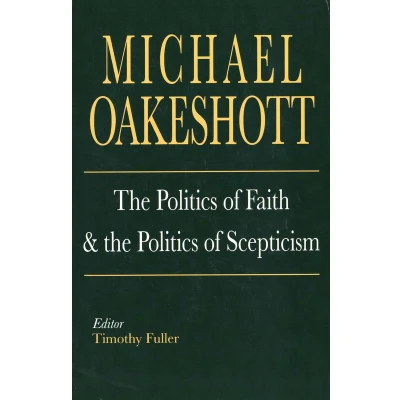
Michael Oakeshott, the foremost British political philosopher of the twentieth century, died in 1990, leaving a substantial collection of unpublished material. Yale University Press is continuing to make available the best of these illuminating works. In this polished and hitherto unknown work, Oakeshott argues that modern politics was constituted out of a debate, persistent through centuries of European political experience down to our own day, over the question "What should governments do?" According to Oakeshott, two different answers have dominated our thought since the fifteenth century. One, exemplified by such thinkers as Rousseau and Marx, expresses a belief in the capacity of human beings to control, design, and monitor all aspects of social and political life, a belief fostered by the intoxicating increase in power available to governments in modern times. On the other hand, sceptics such as Montaigne, Pascal, and Hobbes argued that governments cannot, in principle, produce perfection and that we should prevent concentrations of power that may result in tyrannies that oppress the dignity of the human spirit. Oakeshott exposes the pitfalls of both positions and shows the value of a middle ground that incorporates scepticism with enough faith to avoid total quietism. Readers of Oakeshott will find here the thinking that lies behind his famous definition of politics as "the pursuit of intimations.".


 Beschrijving
(1)
Beschrijving
(1)
Michael Oakeshott, the foremost British political philosopher of the twentieth century, died in 1990, leaving a substantial collection of unpublished material. Yale University Press is continuing to make available the best of these illuminating works. In this polished and hitherto unknown work, Oakeshott argues that modern politics was constituted out of a debate, persistent through centuries of European political experience down to our own day, over the question "What should governments do?" According to Oakeshott, two different answers have dominated our thought since the fifteenth century. One, exemplified by such thinkers as Rousseau and Marx, expresses a belief in the capacity of human beings to control, design, and monitor all aspects of social and political life, a belief fostered by the intoxicating increase in power available to governments in modern times. On the other hand, sceptics such as Montaigne, Pascal, and Hobbes argued that governments cannot, in principle, produce perfection and that we should prevent concentrations of power that may result in tyrannies that oppress the dignity of the human spirit. Oakeshott exposes the pitfalls of both positions and shows the value of a middle ground that incorporates scepticism with enough faith to avoid total quietism. Readers of Oakeshott will find here the thinking that lies behind his famous definition of politics as "the pursuit of intimations.".
 Productspecificaties
 Gerelateerde resultaten


